

The Ultimate Guide to Industrial Roof Refurbishment in South Africa
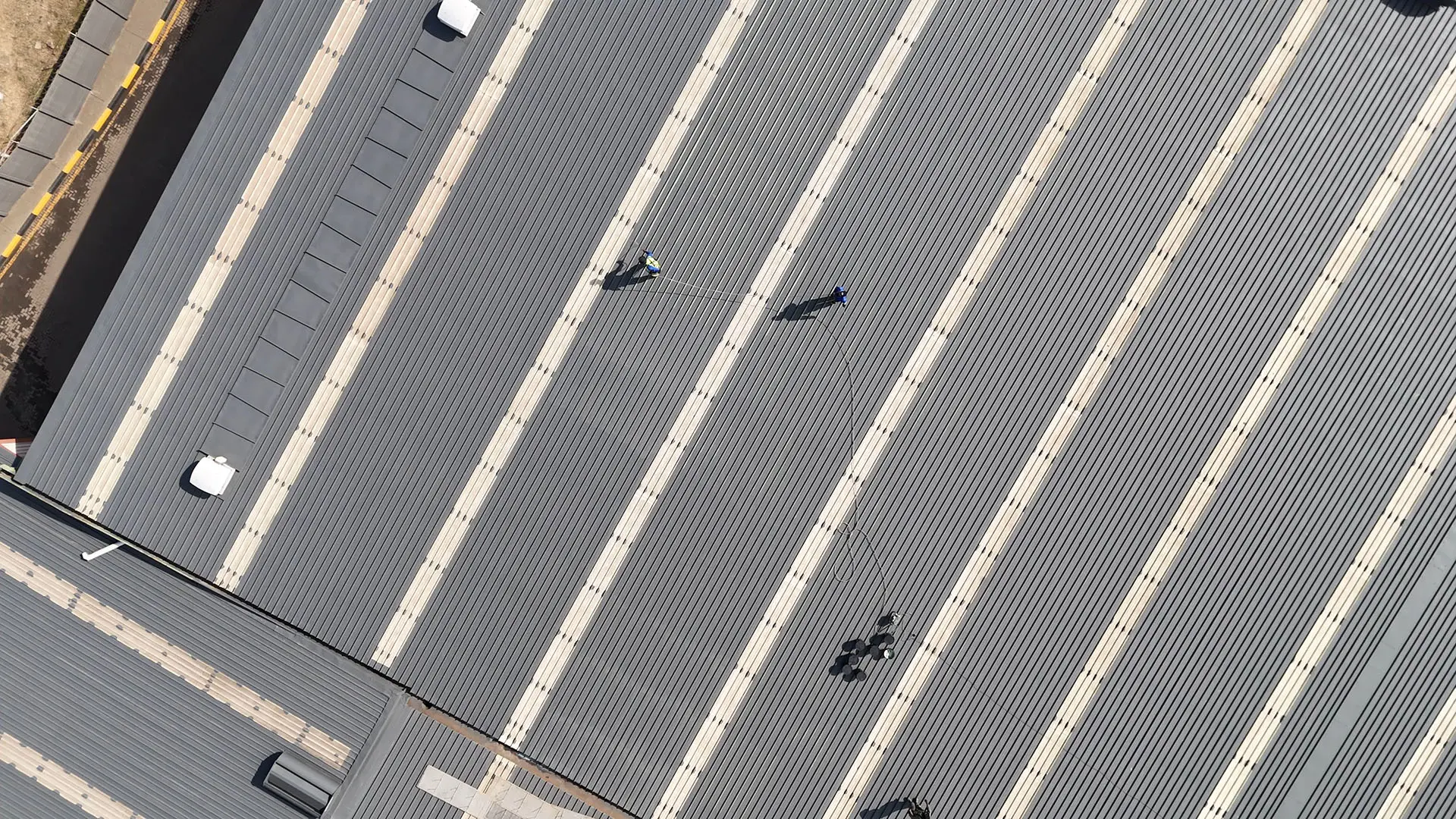
Complete Guide
The Ultimate Guide to
Industrial Roof Refurbishment
in South Africa
An industrial roof refurbishment is one of the most significant maintenance decisions a facility owner or operations director will make. Done correctly, it adds decades to the lifespan of the building and eliminates one of the most disruptive variables in facility management. Done incorrectly, or with the wrong contractor, it creates a false sense of security that can be costly to undo. This guide covers everything you need to know to approach a refurbishment project with confidence.
Refurbishment vs. Replacement: Understanding the Difference
The first question most facility managers ask when their roof reaches a critical state is whether to refurbish or replace. The answer depends on the condition of the underlying structure, not just the waterproofing layer on top.
Refurbishment is appropriate when:
- The structural sheeting and purlins are in sound condition with no significant corrosion or deformation
- Fixings and fasteners can be re-seated or replaced without compromising sheet integrity
- The roof profile is suitable for the application of a new waterproofing system
- Drainage design is adequate and can be maintained or upgraded without structural changes
Replacement becomes necessary when structural sheeting has corroded beyond safe load-bearing capacity, when fixing points have failed irreparably, or when the roof profile has deformed to the point where adequate drainage is impossible. A specialist assessment is the only reliable way to determine which category your roof falls into.
"A refurbishment that is applied over a structurally compromised roof is not a solution. It is a delay. The assessment phase is not optional — it determines whether the money you spend produces a lasting result or a temporary one."
The Five Signs Your Industrial Roof Needs Refurbishment Now
Industrial roofs rarely fail overnight. They give consistent warning signs for months or years before a critical failure occurs. If your facility is showing any combination of the following, a refurbishment assessment should be scheduled without delay.
Recurring Leaks Despite Repairs
If the same areas of your roof have been patched more than twice and continue to leak, the underlying waterproofing system has failed. Patches address symptoms. Refurbishment addresses the system.
Visible Rust Streaking on Sheeting
Surface rust that has progressed to streaking indicates corrosion has penetrated the sheet coating. Left unaddressed, this leads to perforation of the sheeting and structural compromise within a few seasons.
Ponding Water After Rain
Areas of standing water on your roof indicate drainage failure or structural deflection. Ponding accelerates membrane breakdown and puts load on sheeting that was not designed for it. It rarely resolves without intervention.
Deteriorating Existing Coatings
Flaking, cracking or delaminating waterproofing coatings expose the membrane and sheeting beneath to direct weathering. Once the coating system is compromised, deterioration accelerates rapidly.
Age of the Existing System
Most industrial waterproofing systems have a design life of 10 to 15 years. If your roof has not been refurbished within that period, it is statistically likely to be approaching or beyond the end of its effective service life, regardless of visible symptoms.
Increasing Insurance or Compliance Pressure
Insurers and occupational health regulators in South Africa are increasingly scrutinising the condition of industrial roof structures. A roof in poor condition can affect your cover and your compliance status under the Occupational Health and Safety Act.
The South African Context: What Makes Our Conditions Different
Industrial roof refurbishment in South Africa is not the same as in Europe or North America. Our climate places specific demands on waterproofing systems that contractors with only generic experience may not account for adequately.
The Highveld in particular presents a challenging combination of conditions:
- Intense UV radiation that degrades unprotected membranes and coatings significantly faster than in temperate climates
- Extreme thermal cycling with daily temperature swings of 15 to 25°C placing continuous stress on joints, laps and sealants
- High-intensity summer thunderstorms delivering large rainfall volumes in short periods that overwhelm drainage systems not designed for the intensity
- Cold, dry winters with significant dew accumulation that keeps moisture in contact with roof surfaces for extended periods each morning
- Wind-driven dust and debris that blocks drainage outlets and abrades membrane surfaces over time
A waterproofing specification written for South African conditions must account for all of these factors. A system that performs well in a mild coastal climate may fail prematurely on a Highveld warehouse roof.
Always confirm that your waterproofing specification has been developed for the specific climate zone and roof type of your facility. A generic specification is a risk, not a solution.
The Refurbishment Process: Phase by Phase
A professional industrial roof refurbishment follows a structured sequence. Understanding each phase helps facility managers plan around the work, allocate budget accurately and hold contractors accountable at each stage.
Condition Assessment
A thorough inspection of the entire roof structure, waterproofing system, drainage infrastructure and all penetrations. This produces a written condition report identifying areas requiring attention, the recommended scope of work, and the specification of materials suited to the building and climate. No credible refurbishment project should begin without this step.
Surface Preparation
The most important and most frequently underestimated phase of any refurbishment. Existing coatings that are not properly keyed, cleaned and primed will cause new systems to delaminate prematurely. Corroded areas must be treated, not painted over. Loose fixings must be re-seated. Drainage must be cleared. The quality of surface preparation determines the lifespan of everything applied above it.
Structural and Drainage Repairs
Any sheeting that has corroded beyond acceptable limits is replaced. Fixing points that have failed are re-drilled and re-seated with appropriate washers and sealants. Drainage outlets, gutters and downpipes are cleared, repaired or upsized where required. Ridge and eave details are inspected and rectified. This phase addresses the substrate before waterproofing begins.
Waterproofing System Application
The specified waterproofing system is applied in accordance with the manufacturer's requirements and the project specification. This typically involves a primer coat, reinforcement layer at all joints and details, and one or more waterproofing coats to the specified dry film thickness. Application rates and curing times must be adhered to strictly. Shortcuts at this stage are the most common cause of premature system failure.
Quality Inspection and Sign-Off
A post-application inspection confirms that coverage is complete, film thickness meets specification, all details and penetrations are correctly sealed, and drainage is functioning correctly. This phase produces the documentation required to support the workmanship guarantee and any product warranty from the manufacturer.
Choosing the Right Waterproofing System for Your Roof
There is no single waterproofing system that is correct for all industrial roofs. The right specification depends on several variables that must be assessed before a product is selected.
- Roof pitch — low-pitch and flat roofs require systems with superior ponding resistance; steeper profiles have different drainage and adhesion requirements
- Roof material — IBR sheeting, box rib, fibre cement and concrete each require different primers and compatible waterproofing products
- Existing coatings — compatibility between old and new products must be confirmed before application; incompatible systems will delaminate
- Thermal movement — buildings with large spans require systems with adequate elongation to accommodate movement at joints without cracking
- Exposure level — roofs with high UV exposure, coastal salt air or chemical vapour from internal processes need systems specified for those conditions
- Intended lifespan — a 5-year maintenance coat and a 15-year guaranteed system have different product, application and inspection requirements
What a Refurbishment Guarantee Should Cover
A workmanship guarantee from a reputable roofing contractor is a critical deliverable from any refurbishment project. Understanding what a credible guarantee looks like helps facility managers avoid being left exposed after a project completes.
A proper refurbishment guarantee should specify:
-
The guarantee period — typically five to ten years for a full refurbishment, clearly stated in writing
-
What is covered — workmanship defects that result in water ingress, not normal wear or damage caused by third parties
-
What voids the guarantee — unauthorised penetrations, third-party work on the roof, or failure to maintain drainage
-
The response commitment — how quickly the contractor will respond to a guarantee claim and attend to a defect
-
Supporting documentation — the condition report, specification, application records and post-inspection sign-off that underpin the guarantee
Budgeting for an Industrial Roof Refurbishment
Refurbishment costs vary significantly depending on roof size, condition, specification and access requirements. Rather than providing figures that may not reflect your specific situation, the most useful guidance is around the budgeting process itself.
Plan your refurbishment budget around three components:
- Assessment and specification — the cost of a professional condition report and written specification. This should never be skipped to save money, as it determines the accuracy of every other cost in the project
- Remediation and application — the primary contract cost covering surface preparation, structural repairs and waterproofing system installation
- Contingency — a minimum of 15% above the primary contract cost to cover conditions discovered during surface preparation that were not visible during the initial assessment
Facilities that skip the contingency allocation consistently find themselves in difficult conversations mid-project when corroded sheeting or failed substrates are uncovered during preparation work.
"Get at least two written quotations based on the same specification document. Quotations based on different scopes or products cannot be compared meaningfully and lead to budget surprises after award."
Maintaining Your Refurbished Roof
A refurbished roof is an asset that needs to be maintained to deliver its full designed lifespan. The most common reason refurbished roofs fail to reach their guaranteed period is not product failure — it is maintenance neglect in the years following the project.
Post-refurbishment maintenance should include:
- Annual or biannual inspection by the installing contractor or a qualified specialist
- Drainage clearing at least twice per year, before summer storms and before winter dew season
- Prompt attention to any new penetrations made by other trades, ensuring they are sealed to the waterproofing specification
- Keeping a maintenance log that documents inspections, findings and any remedial work carried out
- Reviewing the guarantee terms before authorising any third-party work on the roof
A roof that receives this level of attention will reliably outlast its guaranteed period and significantly reduce the total cost of ownership over the life of the building.
Start With a Professional Assessment
Every successful refurbishment project starts with an honest evaluation of the roof. Contact Sicon Group to arrange yours.
Contact Sicon Group