
Rope
Access
Safe & Efficient Solutions for High-Risk Work
Rope Access Services South Africa – Industrial & Commercial Specialists
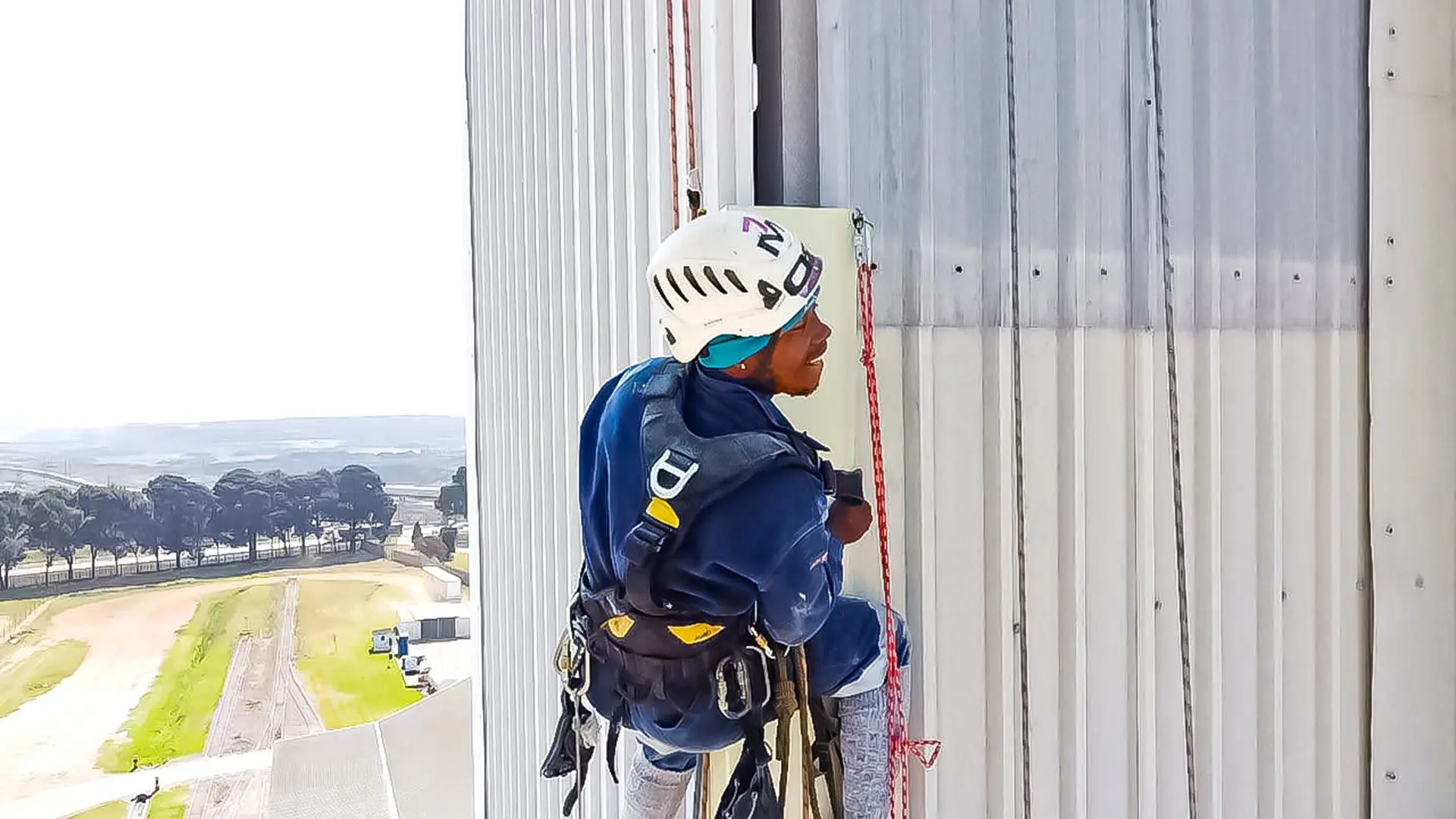
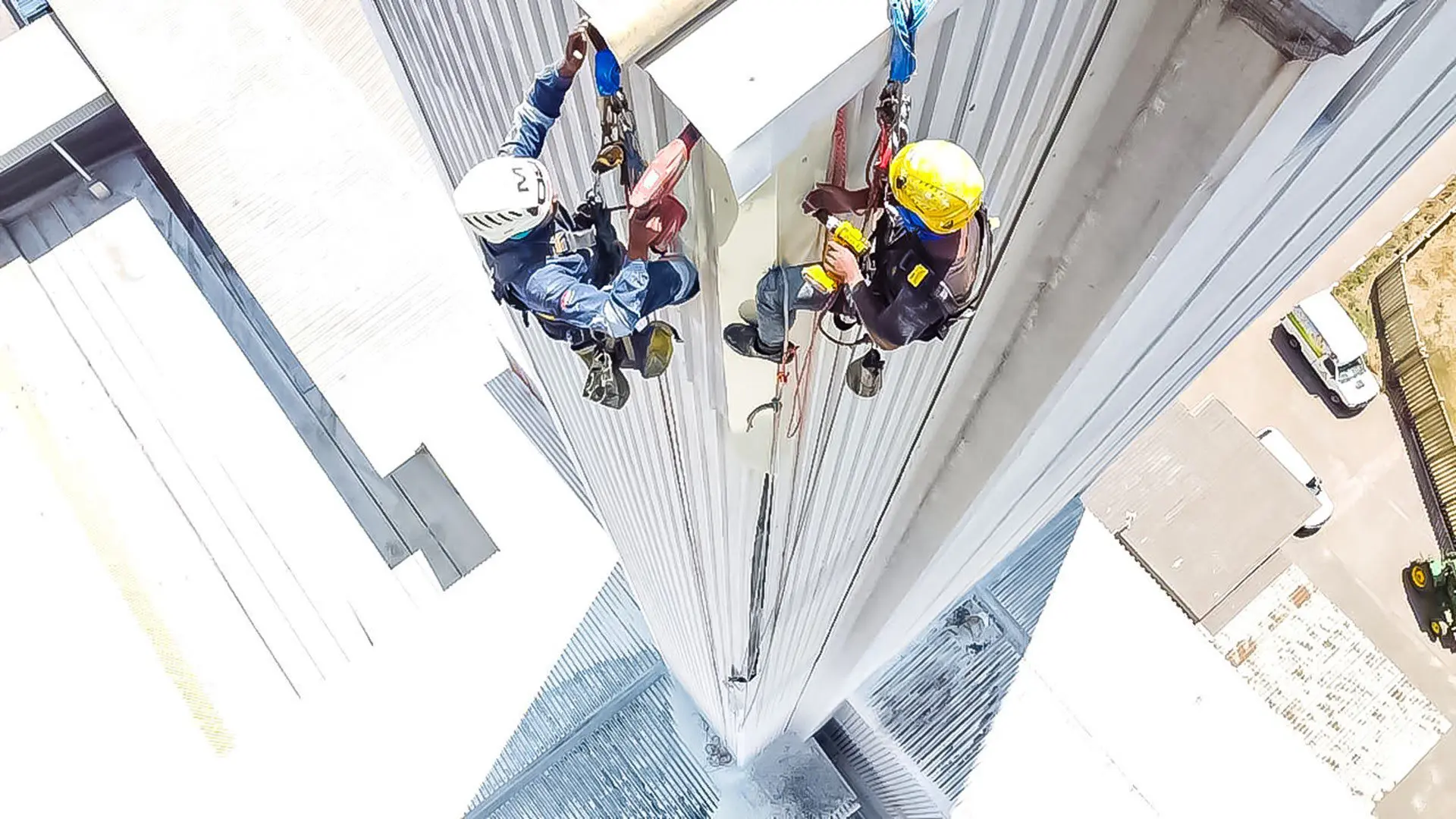
Rope access is a method of reaching high or awkward parts of a structure using ropes and harnesses instead of scaffolding or a cherry picker. Technicians descend from anchor points above, work suspended on two independent ropes, and leave nothing standing behind them. Sicon Group uses it across South Africa wherever a structure is too tall, too enclosed or too busy for conventional access.
Every rope access job is a work-at-height operation, which means it runs under a documented fall protection plan and is carried out by technicians trained and assessed to work on rope. Sicon Group teams handle inspections, maintenance, repairs, cleaning, coating and installation work from rope, on facades, roofs, silos, towers and internal structures, with no scaffolding to erect and minimal disruption to whatever is happening below.
Call now on 083 345 4649 to receive your FREE roof inspection, which includes a full photographic analysis and a problem identification report, accompanied by a no-obligation FREE quotation tailored to suit your specific requirements and budgetary needs.
Why Use Rope Access Instead of Scaffolding?
Scaffolding has to be designed, erected, inspected and dismantled around the actual work, and it occupies the ground beneath it the whole time. A rope access team rigs from anchor points above and can be working the same day. On short or intermittent jobs at height, most of the cost of scaffolding is the scaffolding.

What Work Can Sicon Group Carry Out on Rope?
Rope access is a way of reaching the work, not a type of work. These are the jobs Sicon Group carries out once its technicians are in position.
- Inspections and Condition Surveys: Close-up photographic inspection of facades, roofs and structures that cannot be reached safely on foot.
- Repairs and Maintenance at Height: Sheeting, fixings, flashings, sealing and cladding repairs carried out from rope.
- Cleaning and Surface Preparation: Washing, degreasing and preparing facades, glazing and industrial structures before further work.
- Coating and Waterproofing: Protective and waterproof systems applied to elevations that scaffolding cannot reach economically.
- Installation and Rigging: Fitting signage, safety lines, netting, gutters and equipment on high or restricted structures.
How Is Rope Access Work Kept Safe?
Rope access is safe because of the system around it, not because the technicians are careful. Five things are in place before anyone leaves the roof.
- Two Independent Ropes: Every technician is attached to a working line and a separate backup line at all times.
- A Written Fall Protection Plan: Prepared before work starts, covering anchors, method and rescue for that specific structure.
- Trained and Assessed Technicians: Teams are trained to recognised rope access standards and reassessed at set intervals.
- A Planned Rescue, Not an Improvised One: A rescue plan and the equipment to carry it out stay on site for the duration of the job.
- Anchors Proven Before Load: Every anchor point is inspected and checked before anyone descends on it.
Why Choose Sicon Group for Rope Access?
- A Roofing Contractor, Not Only an Access Company: The technician on the rope is a roofer, so a fault found during an inspection can usually be repaired on the same visit.
- 25+ Years in Industrial Roofing: Rope access backed by more than two decades of work on industrial, commercial and retail buildings.
- National Coverage: Branches from the Vaal Triangle to the Garden Route, so sites anywhere in South Africa can be reached.
- A Documented Method and Rescue Plan: Every job is planned in writing before mobilisation, including how a technician would be recovered.
- Backed by Sicon Group Guarantees: Work carried out on rope carries the same guarantees as work done from a scaffold, up to 20 years depending on the system.
Where Is Rope Access Used?
- Tall or Multi-Storey Facades:
Elevations where erecting a scaffold would cost more than the work being done on it. - Sites That Cannot Stop Trading:
Warehouses, factories and retail centres that need to keep operating while work goes on overhead. - Silos, Towers and Chimneys:
Structures with no practical footprint for scaffolding or a mechanical lift. - Internal Voids and Atriums:
Roof sheets, lighting and services above a working floor, reached from above rather than from below. - Short or Intermittent Jobs:
Inspections and small repairs where the setup cost of conventional access outweighs the task itself.
What Happens During a Rope Access Job?
Survey and Structure Assessment
Before anything is rigged, the structure is surveyed. Sicon Group identifies where technicians can be anchored, what those anchors are fixed to, and whether the structure will carry the load. The survey also records what sits beneath the work: walkways, plant, parking and public access, all of which may need to be closed off. Where the job is an inspection, the survey doubles as the first look at what needs attention. Nothing is quoted until this is done, because both the access method and the cost depend on what the survey finds.
Fall Protection Plan and Method Statement
Work at height runs on a documented plan, not on judgement at the edge of the roof. Sicon Group prepares a fall protection plan and method statement for each job, drawn up by a competent person, setting out the anchor arrangement, the sequence of work, the exclusion zone below and the rescue procedure. The client receives it before mobilisation, which matters where a site keeps its own safety file. Any job where the plan cannot be satisfied does not go ahead on rope.
Rigging and Anchor Setup
On the day, anchors are installed or attached to existing structure and proven before any load goes onto them. Each technician rigs a working line and a separate backup line from independent points, so no single failure can drop anyone. Rope protectors go wherever a line crosses an edge, and the ground beneath the work is cordoned and signed. Setup on a typical elevation is measured in hours rather than the days a scaffold takes, which is where most of the time saving on a short job comes from.
The Work on Rope
With the ropes rigged, technicians descend and carry out the work. Because Sicon Group's teams are roofers, that can mean sealing a joint, renewing fixings, replacing roof sheets, clearing a blocked outlet or treating rust rather than only reporting it. Progress is photographed as it goes, including anything found that was not part of the original scope. On inspection work every elevation is covered systematically rather than sampled, which is the advantage of being on the face of a building instead of looking at it through a lens.
De-rig, Report and Handover
When the work is finished the ropes, anchors and barriers come down and the site is left as it was found, which is the part scaffolding cannot match. The client receives a report with photographs of the work carried out and of anything identified for future attention, in a form that goes straight into a maintenance file. Where an inspection has found work that needs doing, it is quoted separately rather than added on site. Follow-up repairs can usually be scheduled without a second survey.


How Does Rope Access Affect a Working Site?
Only the Ground Below the Work Is Closed
Rope access needs an exclusion zone directly beneath the work, not around the whole building. On most sites that is a marked area a few metres across, moved along as the technicians move, with barriers, signage and someone on the ground keeping it clear. A scaffold occupies its full footprint from the day it goes up to the day it comes down, whether anyone is working on it or not. For a building that has to keep functioning, that difference is the difference between a nuisance and a shutdown.
Your Yard and Parking Stay Available
A scaffold arrives on trucks, needs somewhere to be laid down and stored, and takes parking bays or yard space for the length of the job. A rope access team arrives with its equipment in vehicles and takes it away again at the end of the day. There is no delivery schedule to coordinate, no lay-down area to surrender and no plant standing idle over a weekend. On tight industrial sites and trading retail centres, ground-level space is often the real constraint rather than cost.
Work Can Follow Your Trading Hours
Because setup and de-rig take hours rather than days, rope access can be scheduled around the way a building is used. Work above a retail floor can be done before opening. Work over a production line can run during a planned shutdown. Work on an office elevation can avoid the hours when the pavement below is busiest. A scaffold cannot be moved on that timescale, so the work has to fit the access. With rope access, the access fits the work.
Weather Stops Work, and the Programme Allows for It
Rope access does not continue in high wind, lightning or heavy rain, and no reputable contractor pretends otherwise. Wind is the usual limit, because it moves a suspended technician and anything being carried. Sicon Group builds weather days into the programme rather than discovering them, and work is left in a safe condition at the end of every descent so that a stoppage does not create a hazard. On fixed-date projects this is planned for at the survey stage.
Equipment Is Logged, Inspected and Retired
Ropes, harnesses, descenders, backup devices and connectors each carry a service life and an inspection record. Equipment is checked before every use, formally inspected at set intervals, and withdrawn at the end of its life or after any event that could have damaged it, whether or not damage is visible. A technician does not take kit off a shelf and go. A client rarely sees any of this, but it is the difference between a rope access company and two people with ropes.
Rope Access Projects Across South Africa
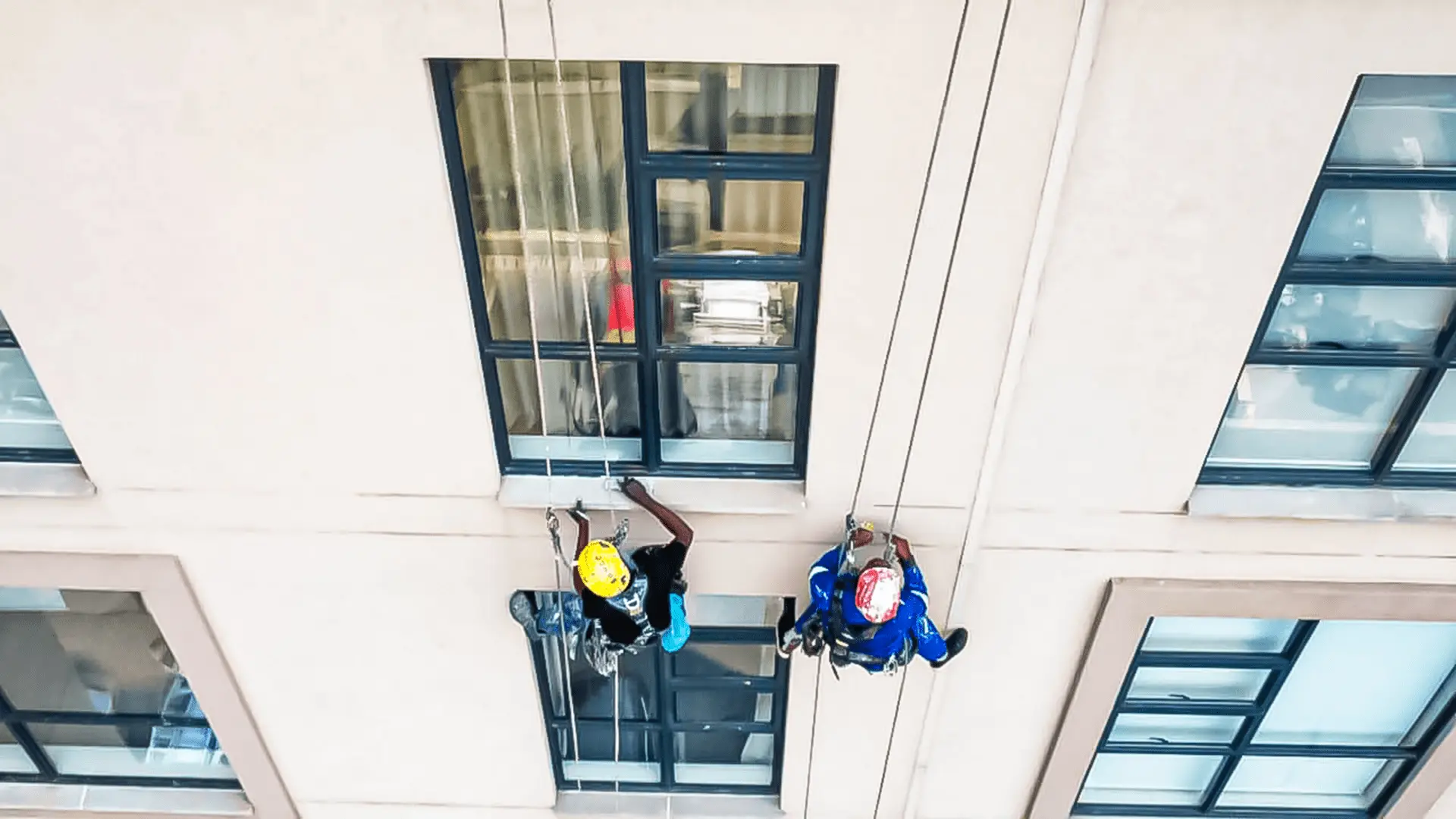
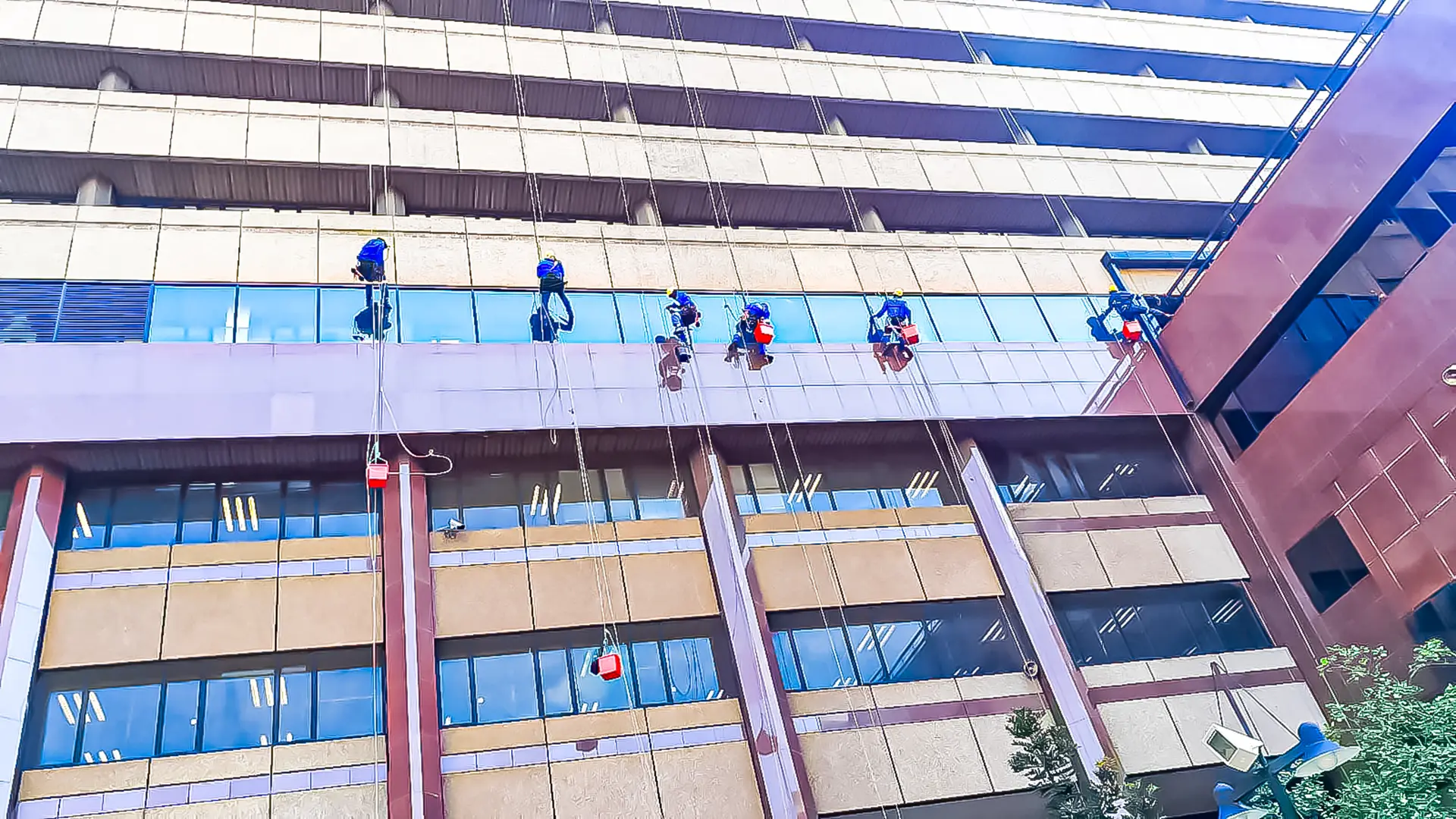
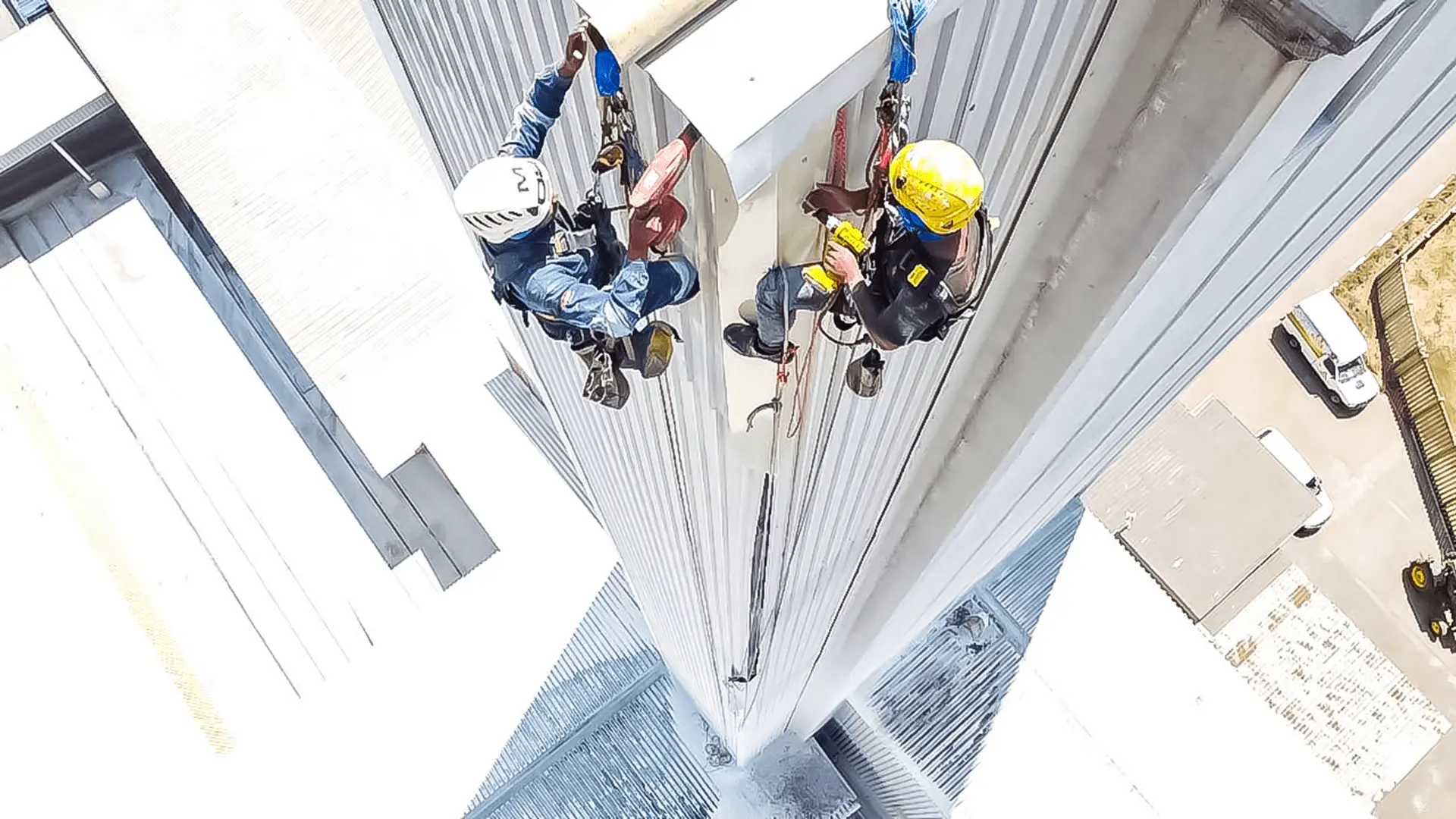
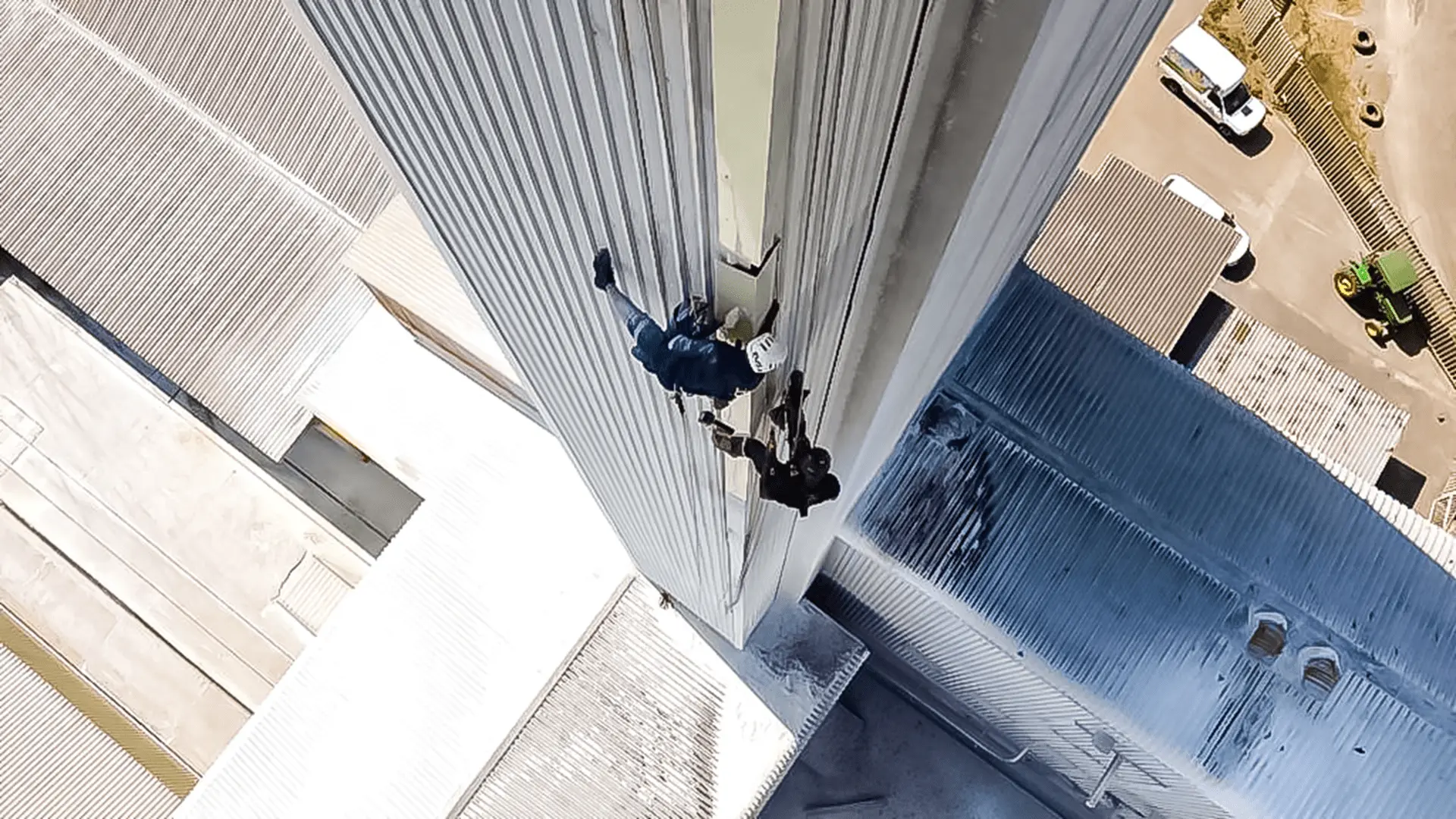
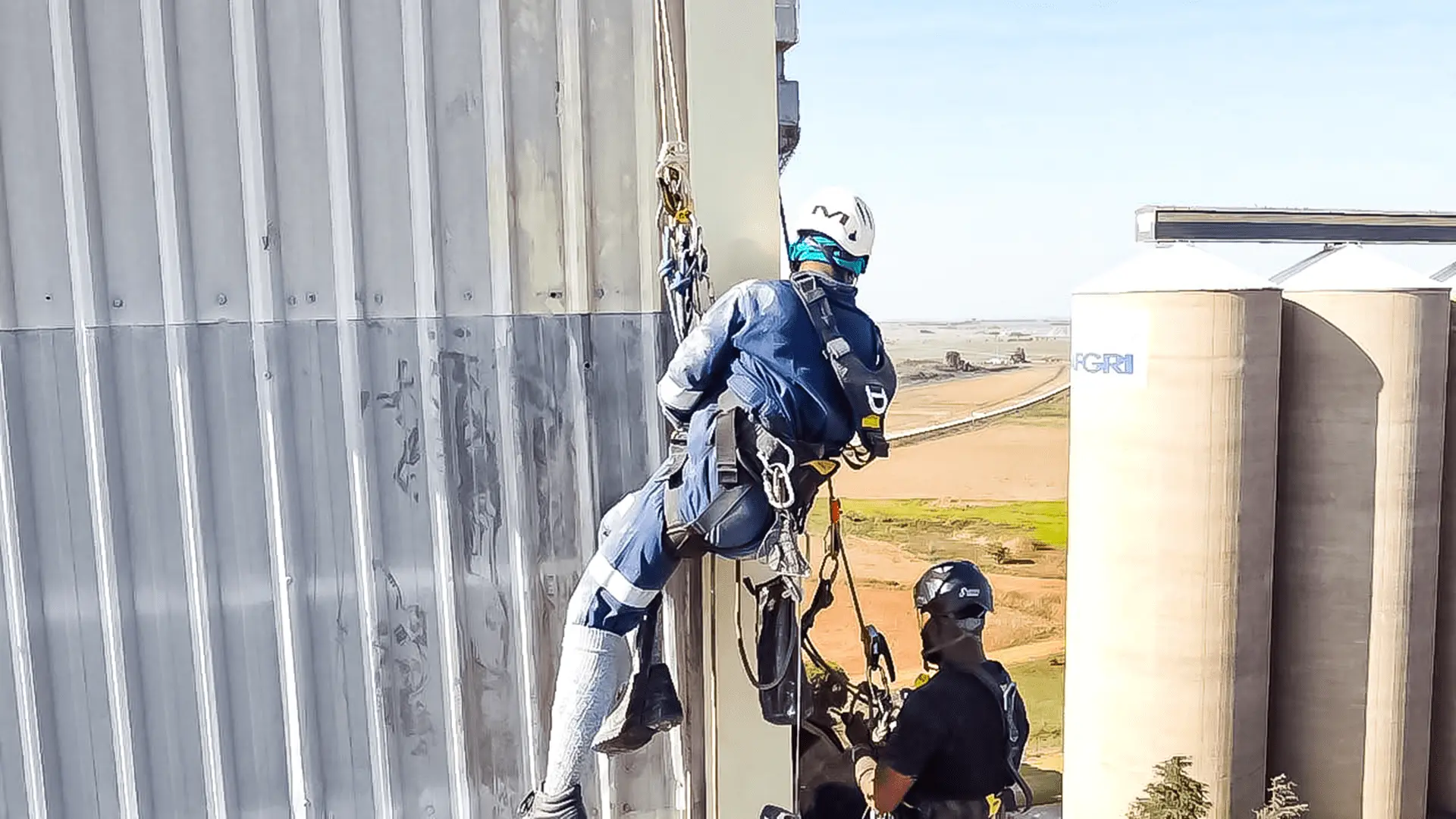
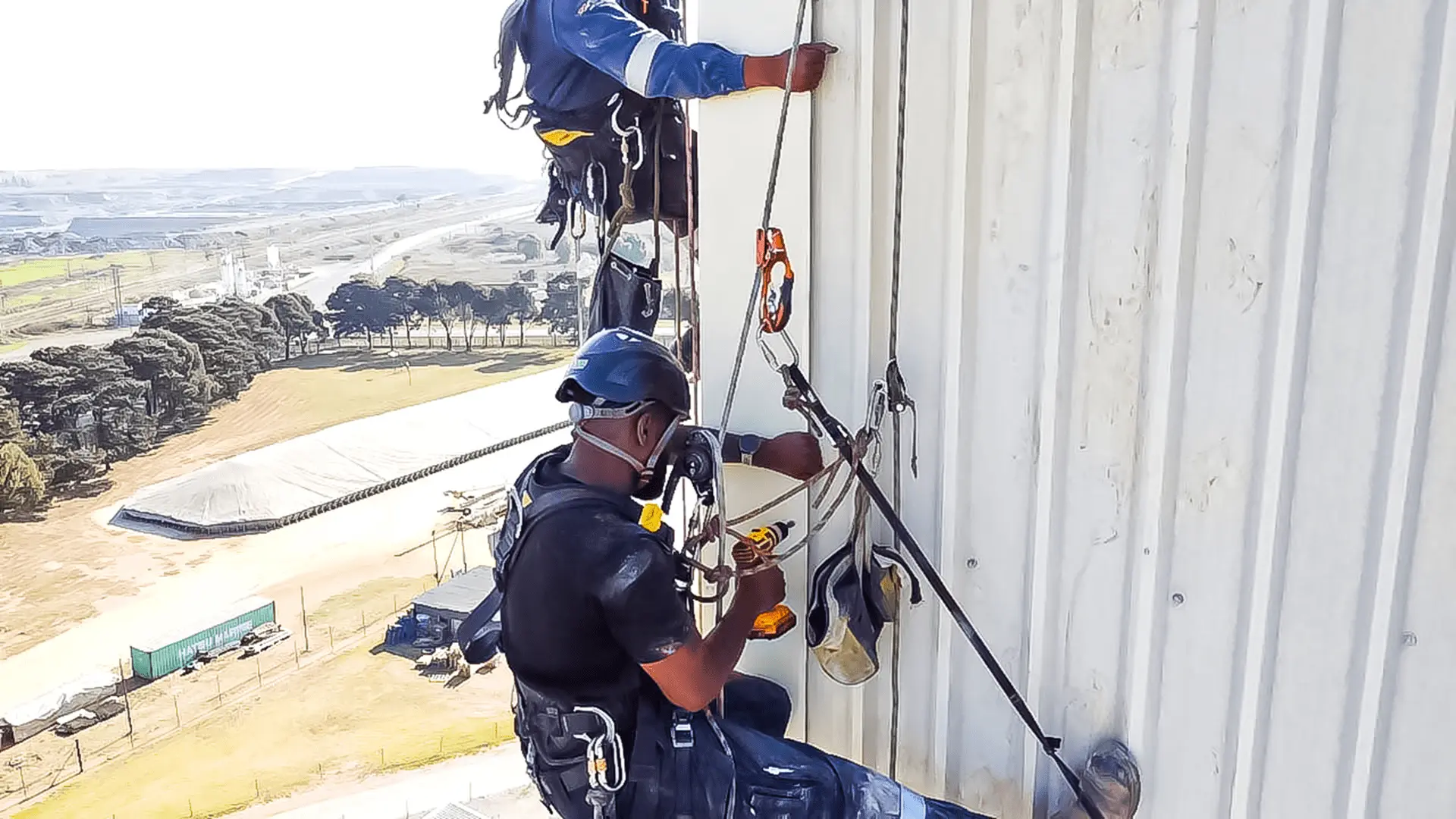
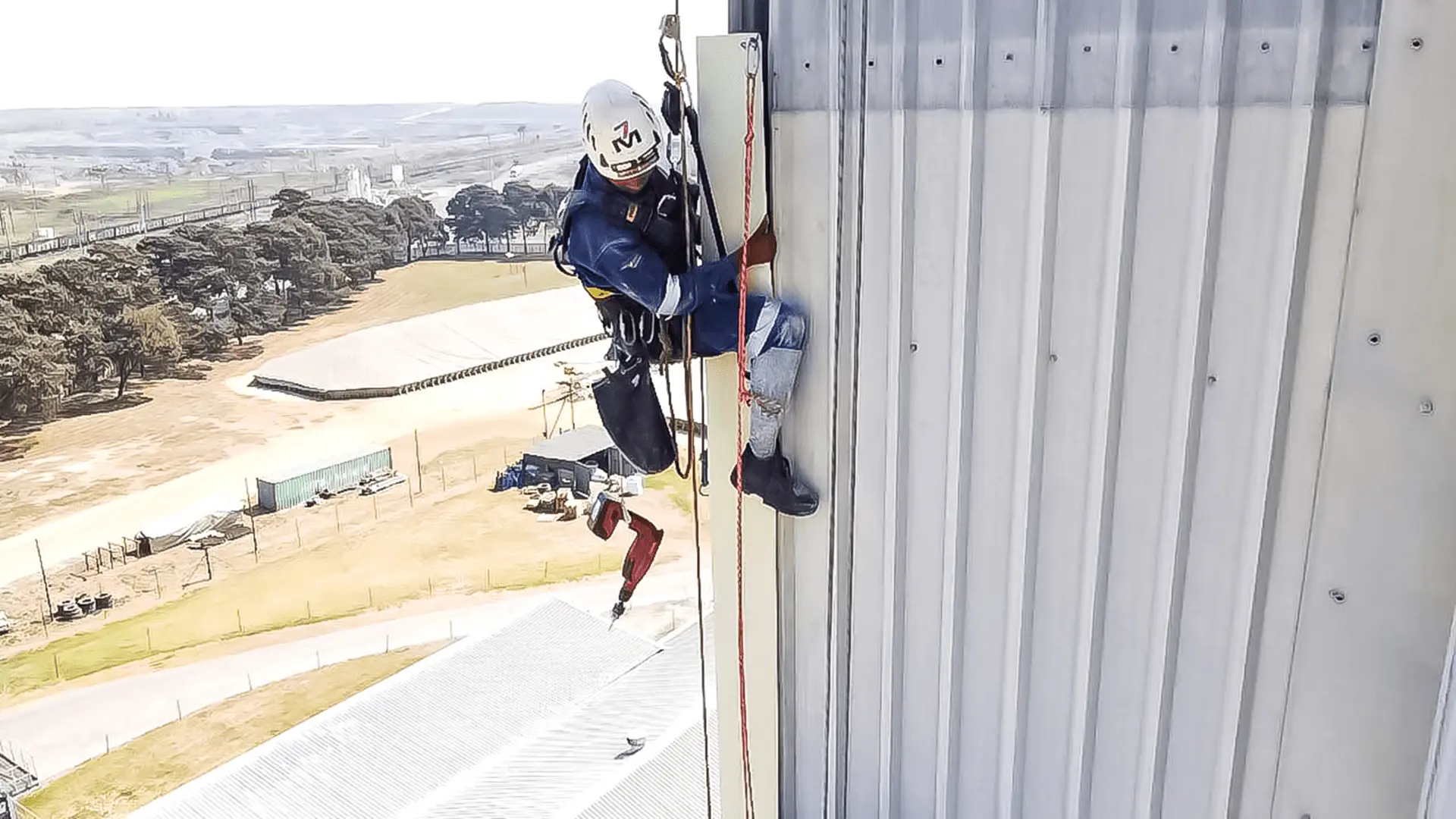
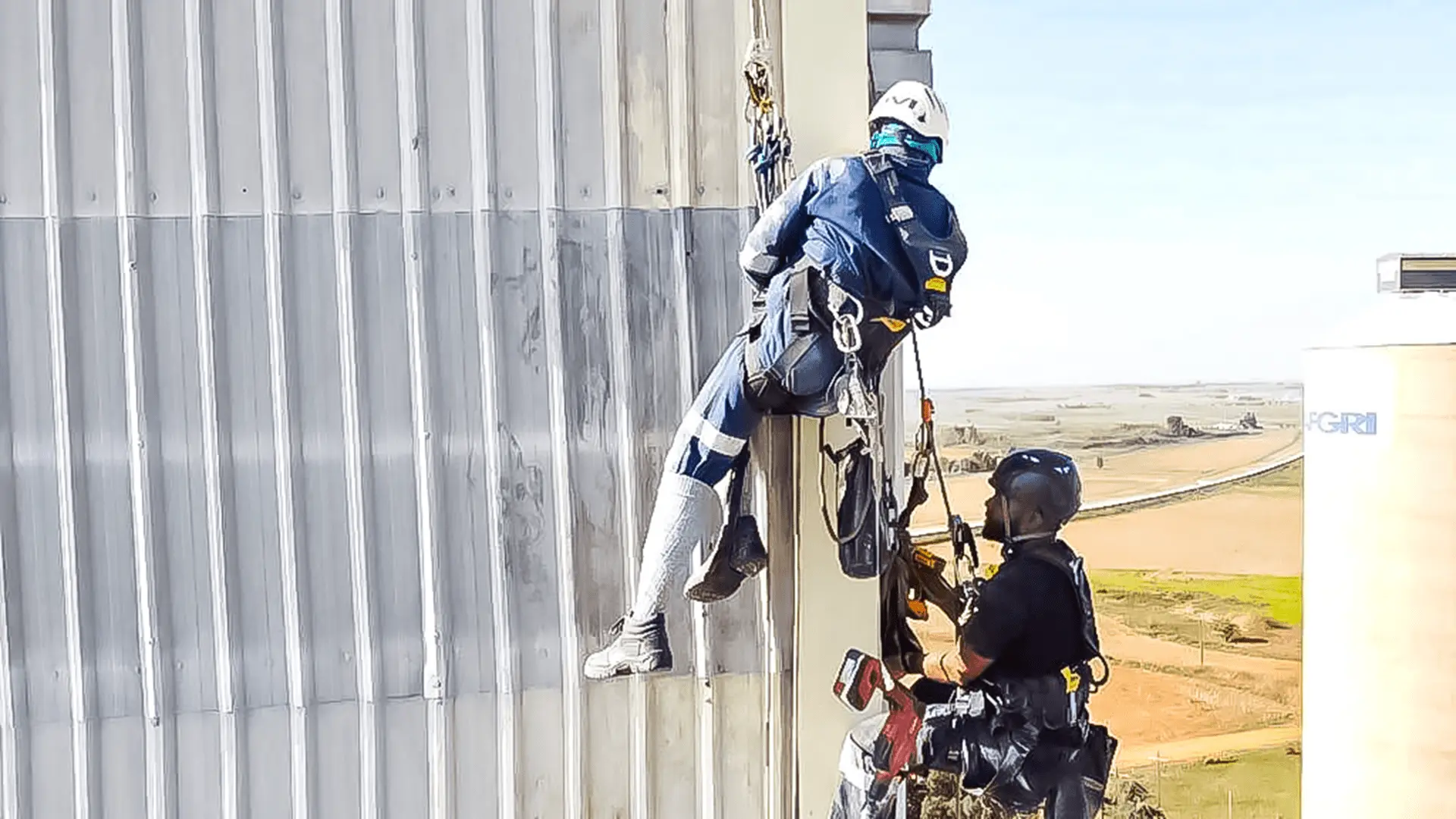
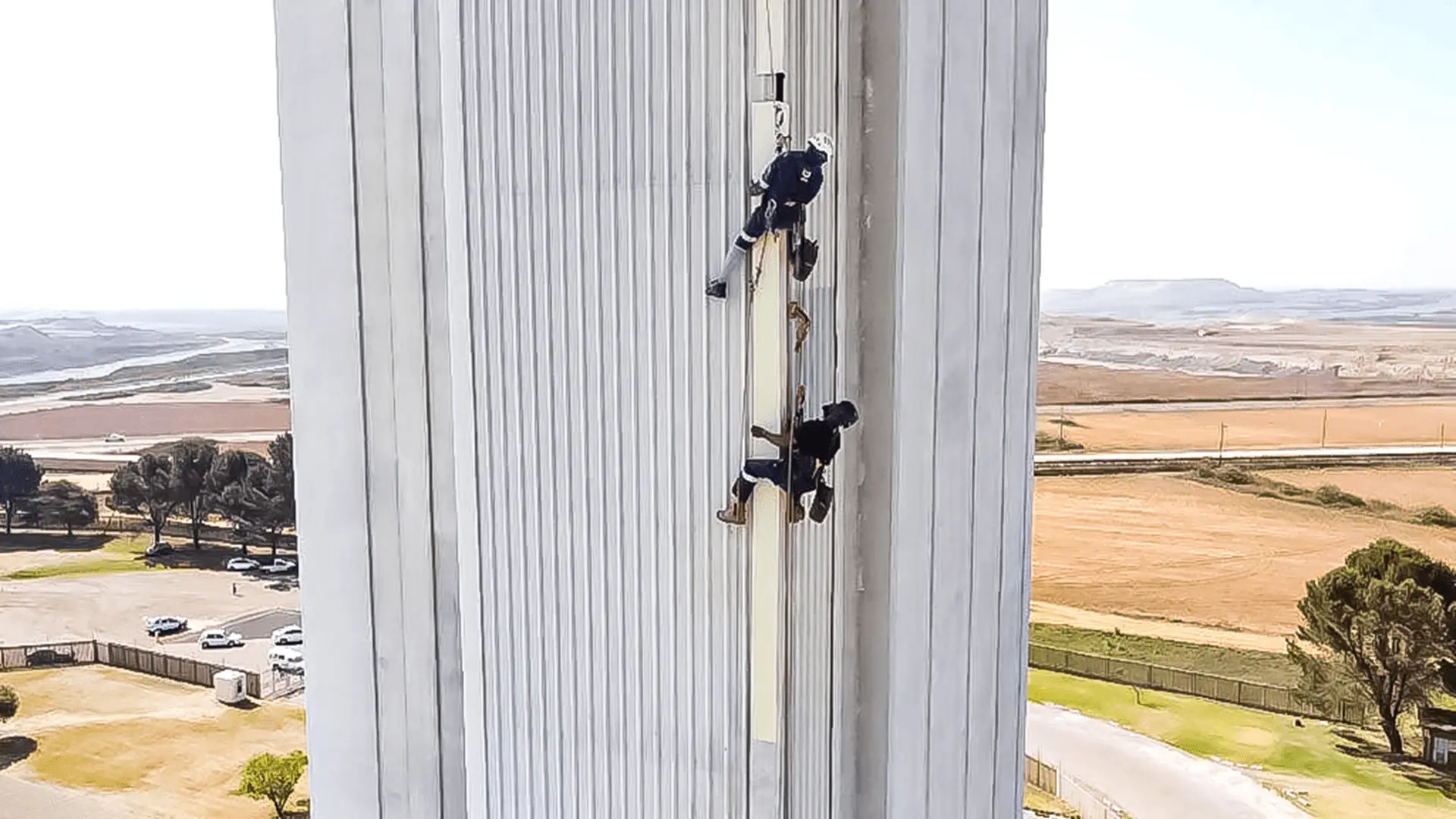
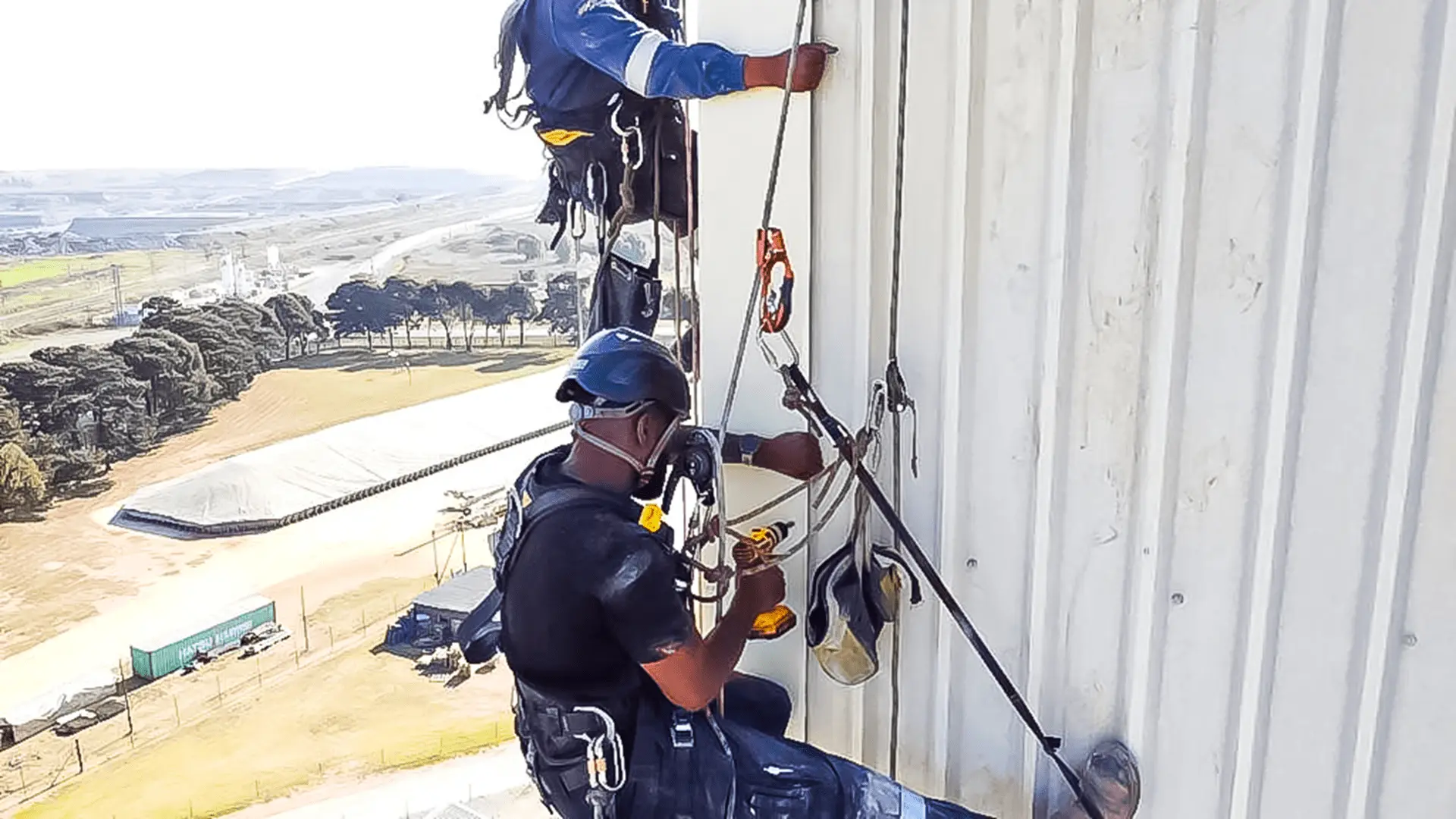
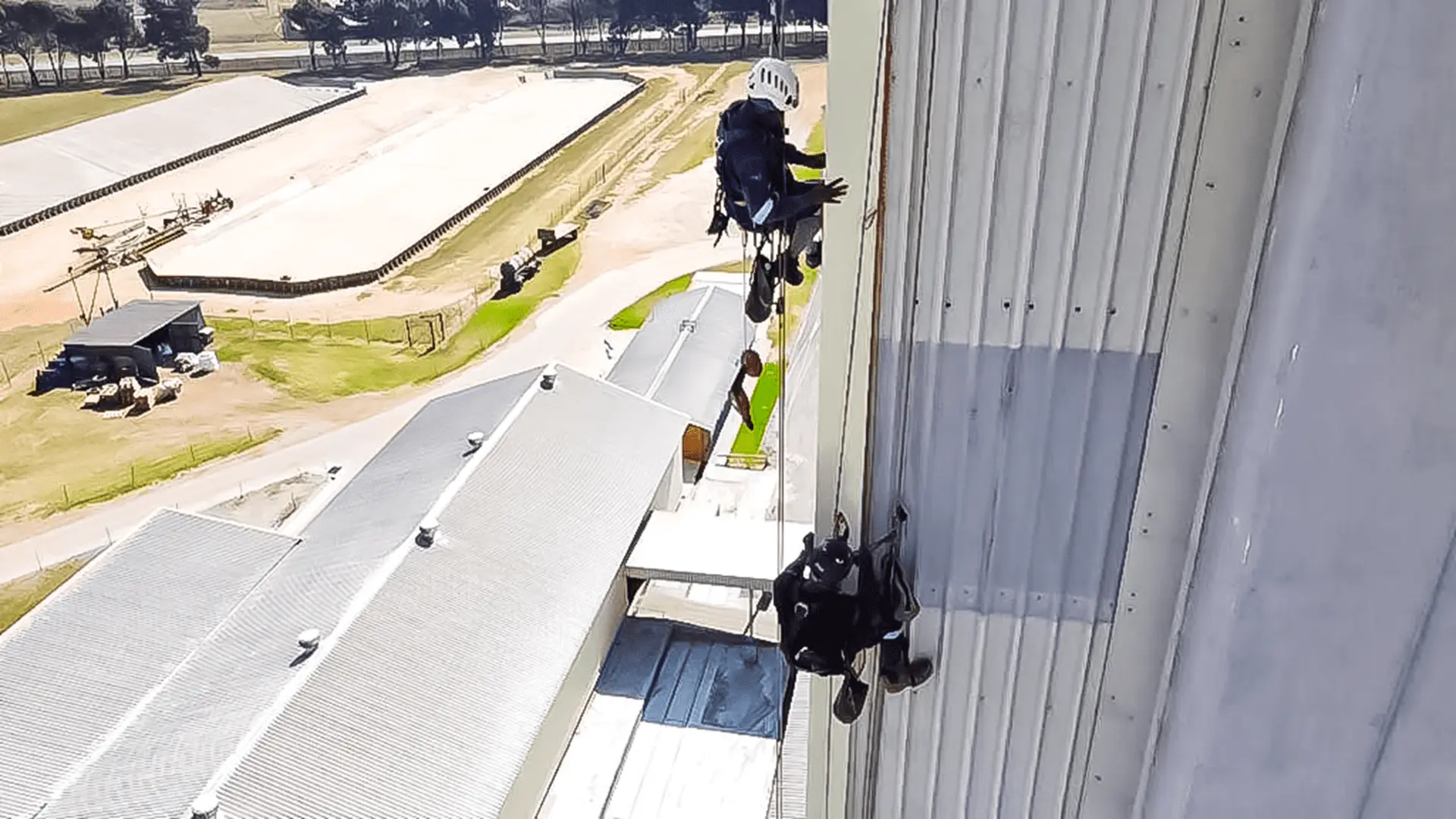
These are rope access jobs carried out by Sicon Group on industrial, commercial and retail buildings. They show technicians working on two ropes, anchor and rigging setups, facade and cladding work, and bosun's chair access on high-rise elevations. Click any image to open it full size.



Rope Access FAQs
When is scaffolding a better choice than rope access?
When the work is long, continuous and covers a whole elevation. A scaffold that stands for weeks while a team works across the full face of a building spreads its erection cost over a great deal of work, and it lets several trades work at once with materials to hand. Rope access wins on short jobs, intermittent jobs and structures where a scaffold cannot practically stand. Sicon Group will tell you which applies after the survey rather than before it.
What qualifications should a rope access technician have?
Ask for two things. First, proof of training and assessment against a recognised rope access standard. Second, a current record showing when that assessment was done and when it expires, because rope access certification is time-limited and has to be renewed. A certificate with no date on it tells you very little. Ask separately who on the crew is qualified to supervise, since every team needs someone with the training and the authority to stop the job.
Can rope access be used on a building with no permanent anchor points?
Usually yes, and most South African buildings have none. Technicians can rig from structural elements proven to carry the load, or temporary anchor systems can be set up for the duration of the job. The survey decides it: something on or near the roof has to be strong enough, correctly positioned and able to be checked. Where nothing suitable exists, permanent roof access safety systems can be installed as a separate piece of work, which then serves every future visit.
What does rope access cost compared with scaffolding?
On short jobs at height it is usually substantially cheaper, because most of the cost of scaffolding is erecting and dismantling it rather than the work done from it. On a long programme across a full elevation the gap narrows and can reverse. The honest answer is that it depends on the shape of the job rather than on the method, which is why Sicon Group surveys before quoting instead of pricing from a description over the phone.
Looking for more detail on rope access?
Step 1: Fill in the contact form below.
Step 2: Select the service you require more information on.
Step 3: Click on send query.
Sicon Group will then provide you with a detailed overview report on the requested service, together with a Sicon Group specialised product report.
.webp)