
Roof Insulation Services
Energy Efficiency & Climate Control
Roof Insulation Services South Africa – Industrial, Commercial & Retail Specialists
Roof insulation is the layer fitted between the roof sheeting and the space below to slow heat moving through it. Its performance is measured as an R-value: the higher the number, the more heat the layer resists. Sicon Group installs and upgrades roof insulation in industrial, commercial and retail buildings across all nine provinces of South Africa, with more than 25 years of experience behind the work.
South Africa's energy usage regulations set minimum roof R-values for new and altered buildings, and the required figure changes with the climatic zone the building sits in. Insulation is fitted most economically while the roof is open, so it is usually installed alongside new roof sheeting or a re-sheet rather than as a separate job.
Call now on 083 345 4649 to receive your FREE roof inspection, which includes a full photographic analysis and a problem identification report, accompanied by a no-obligation FREE quotation tailored to suit your specific requirements and budgetary needs.
Why Do Industrial Buildings Need Roof Insulation?
In a large single-storey building the roof is the biggest surface exposed to the sun, which makes it the main route heat takes in and out. Insulating it changes indoor temperature more than any other single measure, and it is why a warehouse can become uncomfortable to work in long before the walls feel warm.

What Types of Roof Insulation Does Sicon Group Install?
Sicon Group installs the full range of roof insulation systems. Which one suits a building depends on the roof profile, how the space is used and the R-value the installation has to reach.
- Thermal Blanket Insulation: Rolled between the sheeting and the purlins as the roof goes on, the standard system for steel roofs.
- Ceiling and Roof Cavity Insulation: Laid above the ceiling where a building has one, typically in office and retail areas.
- Spray Foam and Polyurethane: Applied as a seamless layer that follows the shape of the roof, with no joints to bridge.
- Acoustic Insulation: Reduces rain noise on steel roofs and limits sound carrying between areas below.
- Eco-Friendly Insulation Materials: Recycled and non-toxic options for buildings working towards a green rating.
What Should a Professional Insulation Installation Get Right?
A quoted R-value only reaches the building if the system is specified and fitted properly. These are the five things that decide whether it does.
- Specified to the Right R-Value: Thickness chosen for the building's climatic zone and use, not fitted to a default.
- Continuous Coverage Without Gaps: Insulation performs to its weakest point, so joints, edges and penetrations are closed properly.
- Vapour Control Where It Is Needed: A correctly placed facing stops warm indoor air condensing against cold steel.
- Installed Around Your Operations: Work is phased so production, storage or trading continues while the roof is open.
- Matched to the Roof It Sits On: The system suits the profile, pitch and structure already in place.
Why Choose Sicon Group for Roof Insulation?
- 25+ Years of Experience: More than two decades of industrial and commercial insulation work across South Africa.
- ISO-Compliant Systems: Installations that support compliance with South African building energy requirements.
- Durable, Sustainable Materials: Products chosen to hold their rated performance over the life of the roof.
- National Coverage: Branches from the Vaal Triangle to the Garden Route, so large sites are serviced anywhere in the country.
- Backed by Sicon Group Guarantees: Roofing work is guaranteed for up to 20 years, depending on the system installed.
How Does Roof Insulation Work?
- It slows conduction: The air trapped inside the insulation conducts heat poorly, so heat moves through the layer far more slowly than through bare steel.
- A reflective facing turns back radiant heat: Foil facings reflect the sun's radiant energy instead of absorbing it, which counts most on a roof in direct sun.
- It keeps warm air off cold steel: Separating indoor air from the underside of the sheeting is what stops condensation forming and dripping.
- It works in both directions: The layer that keeps summer heat out keeps warmth in during winter, so the benefit runs all year.
- Its rating is the R-value: The higher the R-value, the more heat the layer resists, and thickness is the main thing that raises it.


What Happens During a Roof Insulation Installation?
Roof Survey and Assessment
Every installation starts with a survey of the existing roof. The team measures the area, records the profile, whether it is IBR, corrugated or concealed fix, and checks the condition of the sheeting, purlins and fixings. Signs of condensation, rust or failed previous insulation are noted, because they change what the new system has to do. Where the roof is being re-sheeted, the insulation is planned into that programme from the start. The survey produces the information the specification is built on, together with a photographic record of the roof as found.
Specification and R-Value
The R-value an installation needs to reach depends on the climatic zone the building sits in and on how the space is used. A cold store, a factory running machinery and an unheated storage warehouse are three different problems. Sicon Group specifies the system type, the thickness and the facing against that target, then sets the choice out in a written quotation so it can be compared properly. Where a building is working towards a green rating or has an energy requirement to satisfy, the specification is written to support it.
Materials and Delivery
Insulation only performs if it arrives in good condition and stays dry. Materials are ordered to the measured area with an allowance for laps and edges, delivered to site in sequence with the roofing programme, and stored under cover until they are fitted. Blanket that has been rained on or crushed does not recover its rated thickness, and thickness is what carries the R-value. Handling the product properly between the truck and the roof is an unglamorous part of the job that decides whether a building gets what it paid for.
Installation
Installation is phased so the building keeps operating. Sections of roof are opened, insulated and closed the same day wherever the programme allows, so no area is left exposed overnight. The team works to the fall of the roof, laps the material in the correct direction and closes joints, edges and penetrations, because insulation performs to its weakest point. Where a vapour facing is used it is placed on the warm side and sealed. All work is carried out under Sicon Group safety procedures with fall protection suited to the roof.
Inspection and Handover
When the installation is finished the roof is inspected for gaps, compressed sections and unsealed penetrations, and the coverage is photographed. The client receives a record of what was installed, the R-value achieved and the guarantee that applies, which runs up to 20 years depending on the system. Where insulation formed part of a re-sheet or a roof restoration, the handover covers the full scope of work. Sicon Group stays available for the follow-up inspections that keep the guarantee in place.


How Does Roof Insulation Pay for Itself?
Reduces Ongoing Energy Costs
Heating and cooling a large building is a permanent cost, and the roof is where most of that energy is won or lost. Insulation reduces the load on air conditioning and heating plant every day it is in place, which is what separates it from a one-off repair: the saving repeats for the life of the roof rather than ending when the work does. Systems are specified for metal roof profiles including IBR and corrugated sheeting, using materials that hold their thermal performance instead of sagging or settling over time.
Increases Occupant Comfort Year Round
An uninsulated steel roof turns a working space into an oven through the afternoon and gives the heat straight back on winter nights. The cost of that shows up in ways nobody attributes to the roof: staff slowing down after midday, stock and packaging degrading in the heat, customers cutting a visit short. Insulation holds the interior within a usable range and dampens the noise of rain and machinery at the same time, which in a busy retail or production space is worth close to as much as the temperature.
Prevents Moisture and Condensation Damage
Condensation forms when warm indoor air meets the cold underside of a steel roof, and on an uninsulated building it can drip like a leak without a single hole in the sheeting. Left alone it rusts purlins, fasteners and the sheets themselves from the inside, where nobody looks until something fails. Insulation with a correctly placed vapour barrier keeps the two apart. The protection counts most in warehouses, distribution centres and cold storage, and it removes a recurring maintenance cost rather than deferring it.
Strengthens Environmental Compliance
Energy efficiency now sits inside South African building requirements rather than alongside them, and a roof that loses heat is the most visible way a building falls short of them. Insulation reduces the demand a building places on mechanical heating and cooling, which is what lowers its measured energy use and its associated emissions. Where a property is pursuing a green rating, the roof is usually the largest single contribution available to it. Materials are selected for performance, recyclability and safe handling so the specification stands up to scrutiny.
Adds Long-Term Property and Asset Value
Operating cost is now part of how commercial and industrial property is valued, and tenants ask about it before they sign. A building that is expensive to hold at temperature carries that against it in every negotiation. Insulation improves the figure a prospective tenant runs, reduces the repair exposure that comes with an unprotected roof, and stays with the asset when it changes hands. Fitted during a re-sheet or added to an existing roof, it is one of the few roofing costs that lands on the asset side.
Roof Insulation Projects Across South Africa
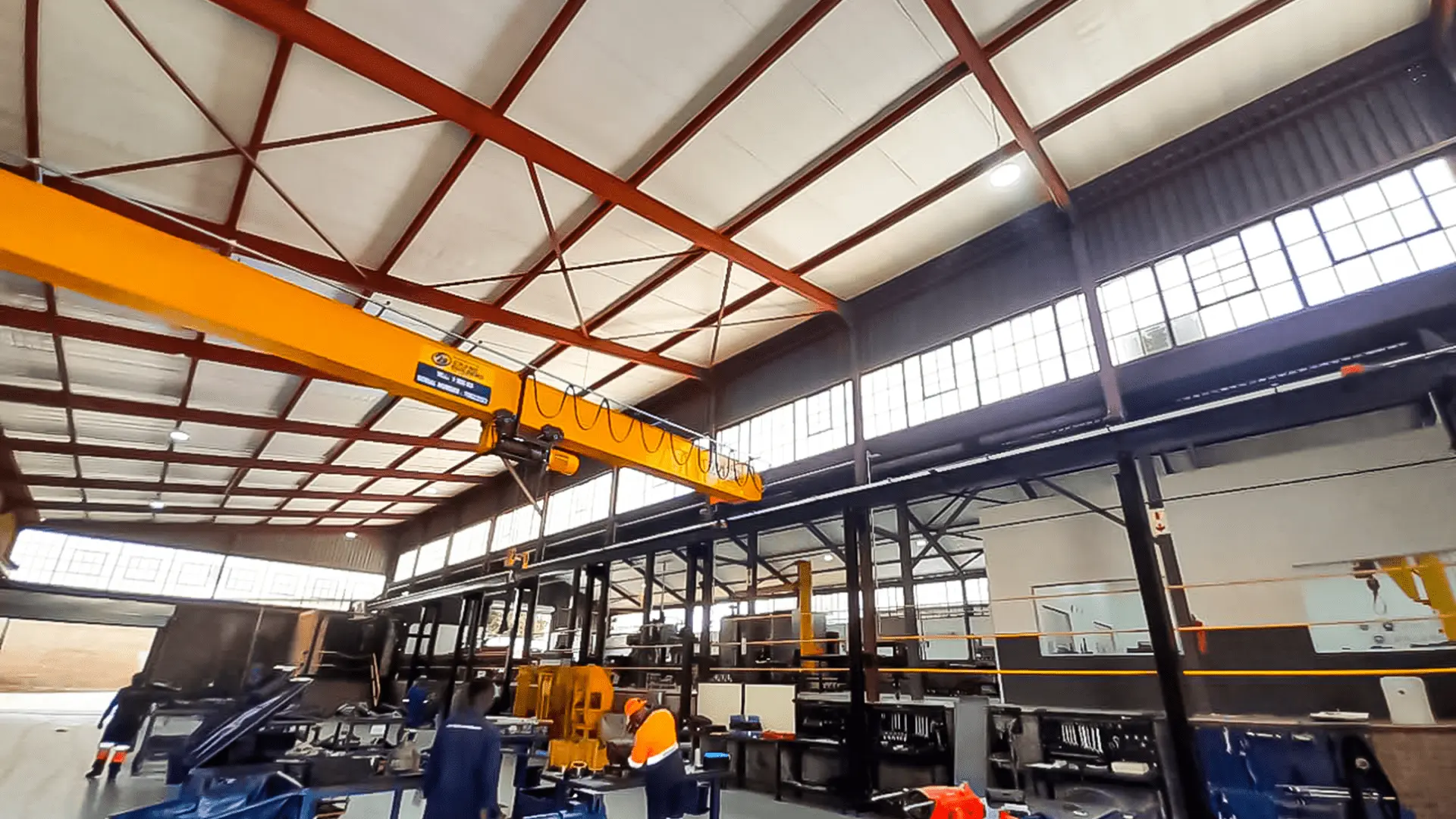
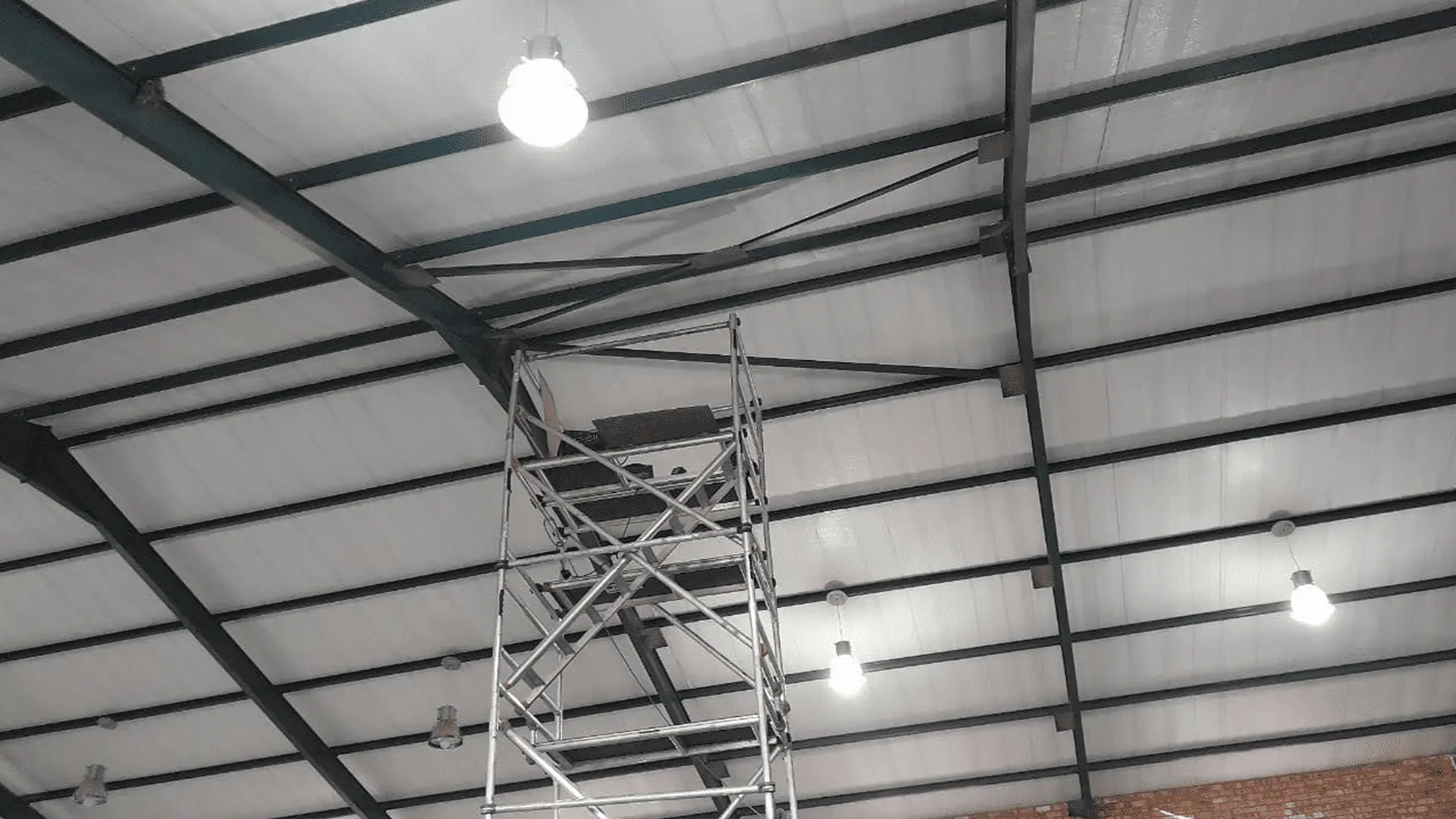
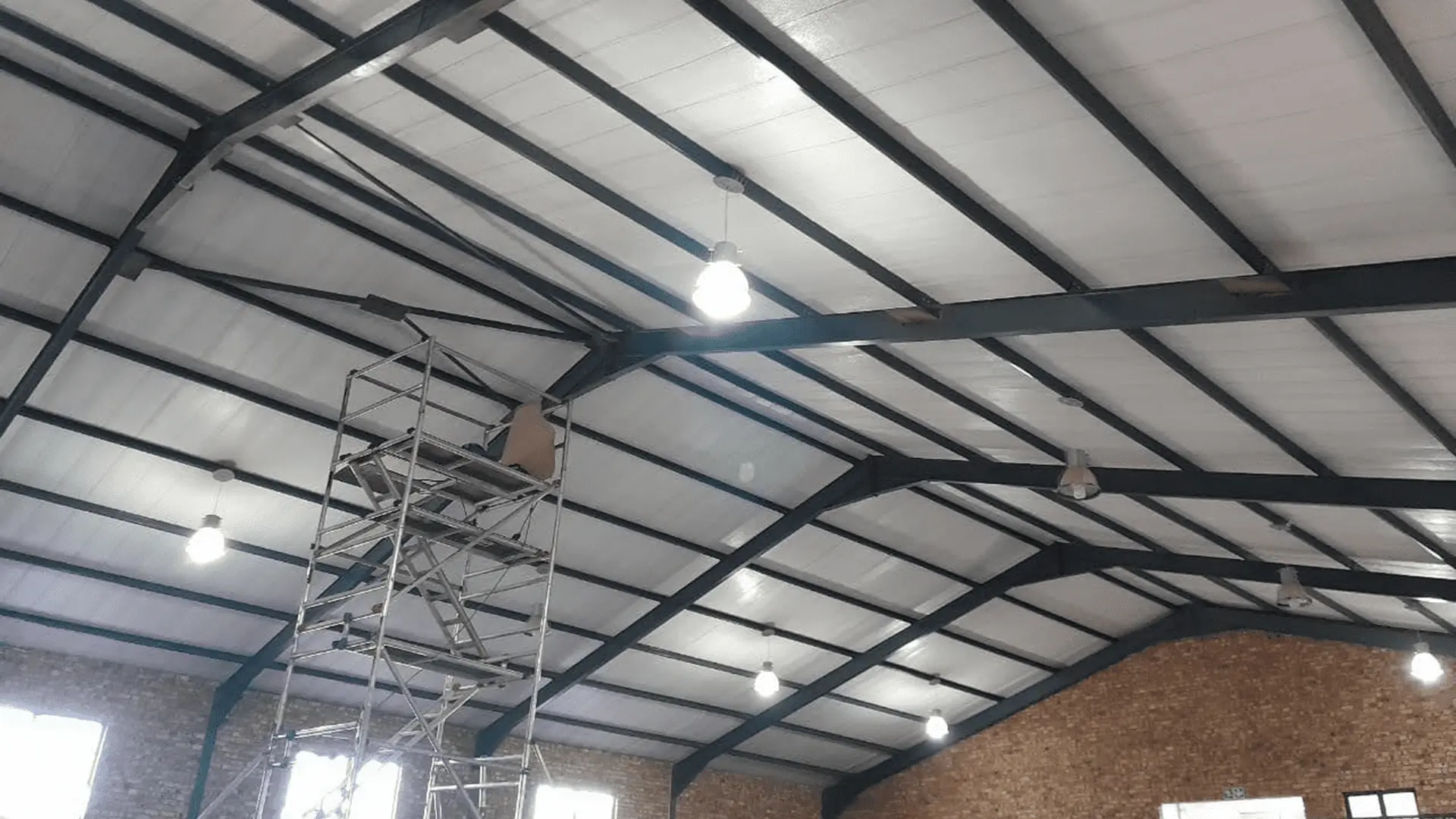
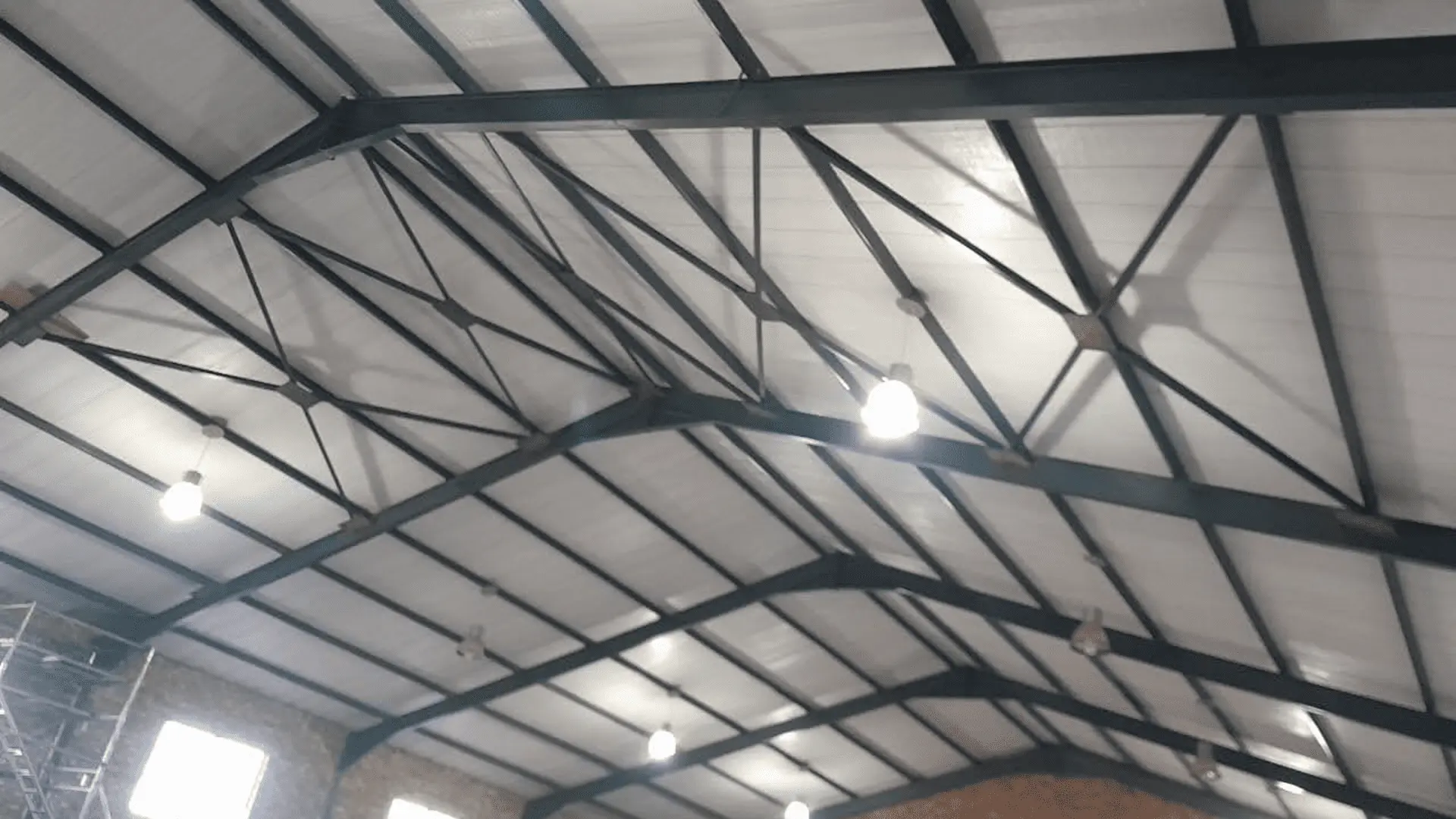
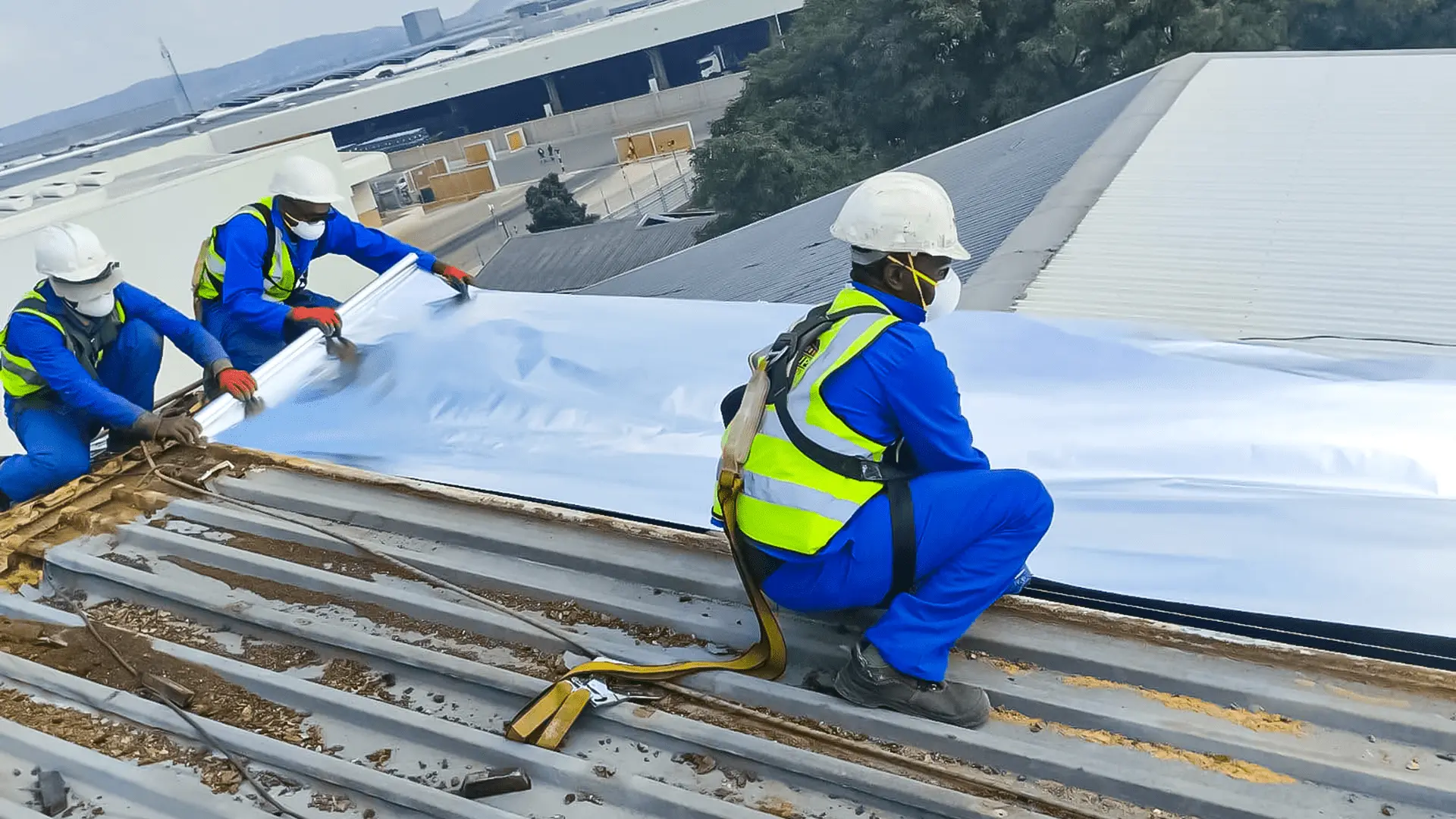
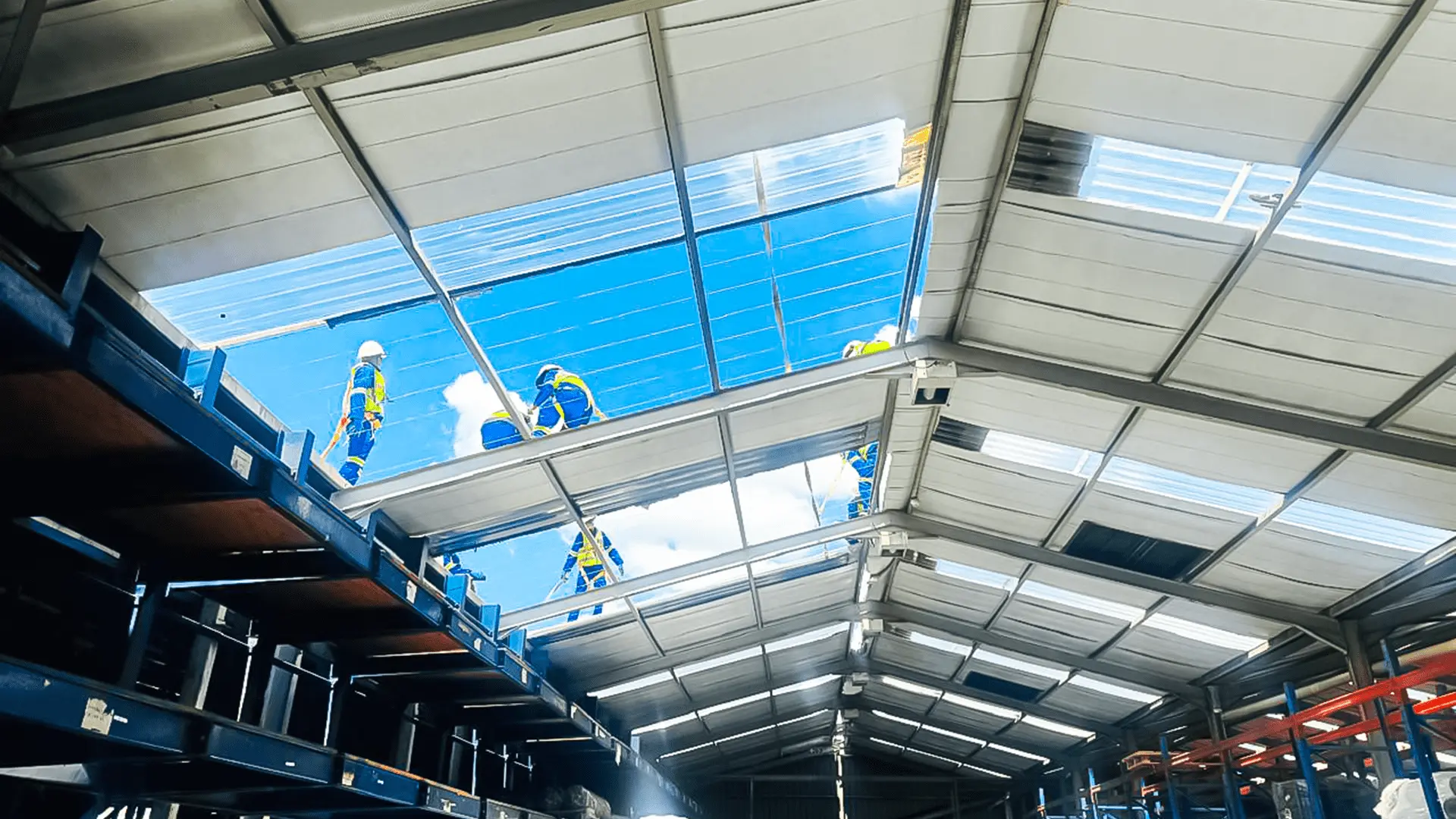
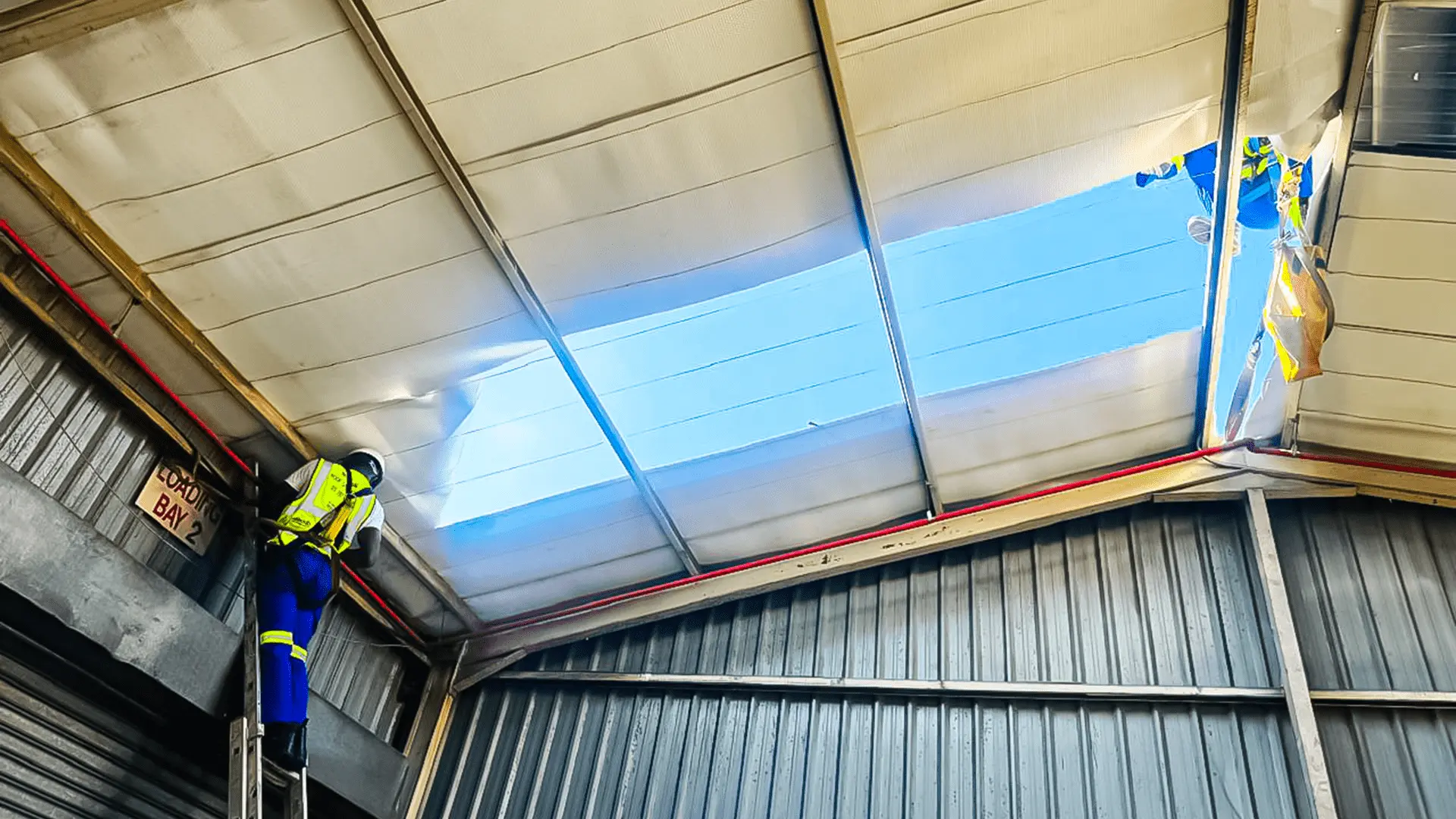
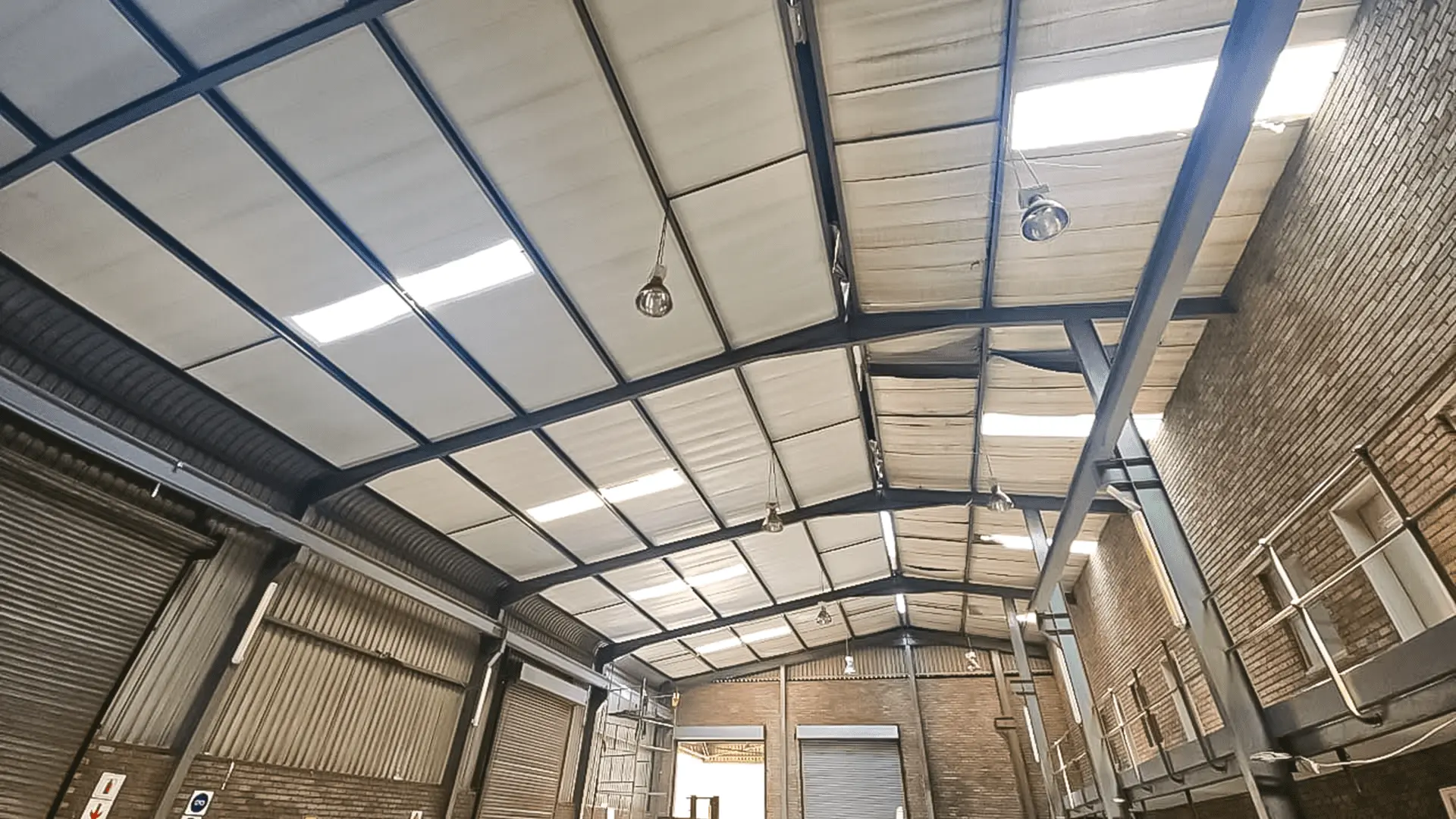
These are roof insulation installations completed by Sicon Group in working industrial, commercial and retail buildings. They show thermal blanket and foil-faced systems fitted between the purlins, ceiling and cavity work, and the access equipment a high roof needs. Click any image to open it full size.






Roof Insulation FAQs
What R-value does my building need?
There is no single figure, because the requirement depends on where the building stands and what happens inside it. South Africa's energy regulations set minimum roof R-values that vary by climatic zone, so a building in a cold interior region needs more than one on the coast. Use matters just as much: a cold store, a factory running hot machinery and an unheated storage warehouse each call for a different specification. Sicon Group establishes the target during the roof survey and quotes against it in writing.
Can roof insulation be installed without replacing the roof?
Often, yes. Spray foam and ceiling or cavity insulation can be fitted from inside a building with the sheeting left in place, and any building with a ceiling void is usually straightforward. Thermal blanket is the exception: it sits between the sheeting and the purlins, so the sheets have to come off to install it. That is why blanket insulation is far more economical as part of a re-sheet or a roof restoration, when the roof is open anyway.
Will roof insulation stop my roof from leaking?
No. Insulation is not a waterproofing product, and a genuine leak through a hole, a failed lap or a perished seal has to be repaired. But not every drip is a leak. Warm indoor air meeting cold steel produces condensation that runs and falls exactly like one, with no hole anywhere in the roof. If water appears on cold mornings while the roof stays dry during rain, insulation with a correctly placed vapour barrier is usually the answer.
Does roof insulation reduce rain noise in a steel building?
Yes, noticeably. A bare steel roof has nothing to absorb the impact of rain or hail, which is why noise inside an uninsulated warehouse can make conversation difficult during a storm. A blanket or foam layer between the sheeting and the space below absorbs part of that energy before it reaches the floor. It also reduces sound carrying between areas and dulls machinery noise reflecting off the underside of the roof.
Looking for more detail on roof insulation?
Step 1: Fill in the contact form below.
Step 2: Select the service you require more information on.
Step 3: Click on send query.
Sicon Group will then provide you with a detailed overview report on the requested service, together with a Sicon Group specialised product report.
.webp)