
Solar & Roofing
Pre-Solar Roof Remediation
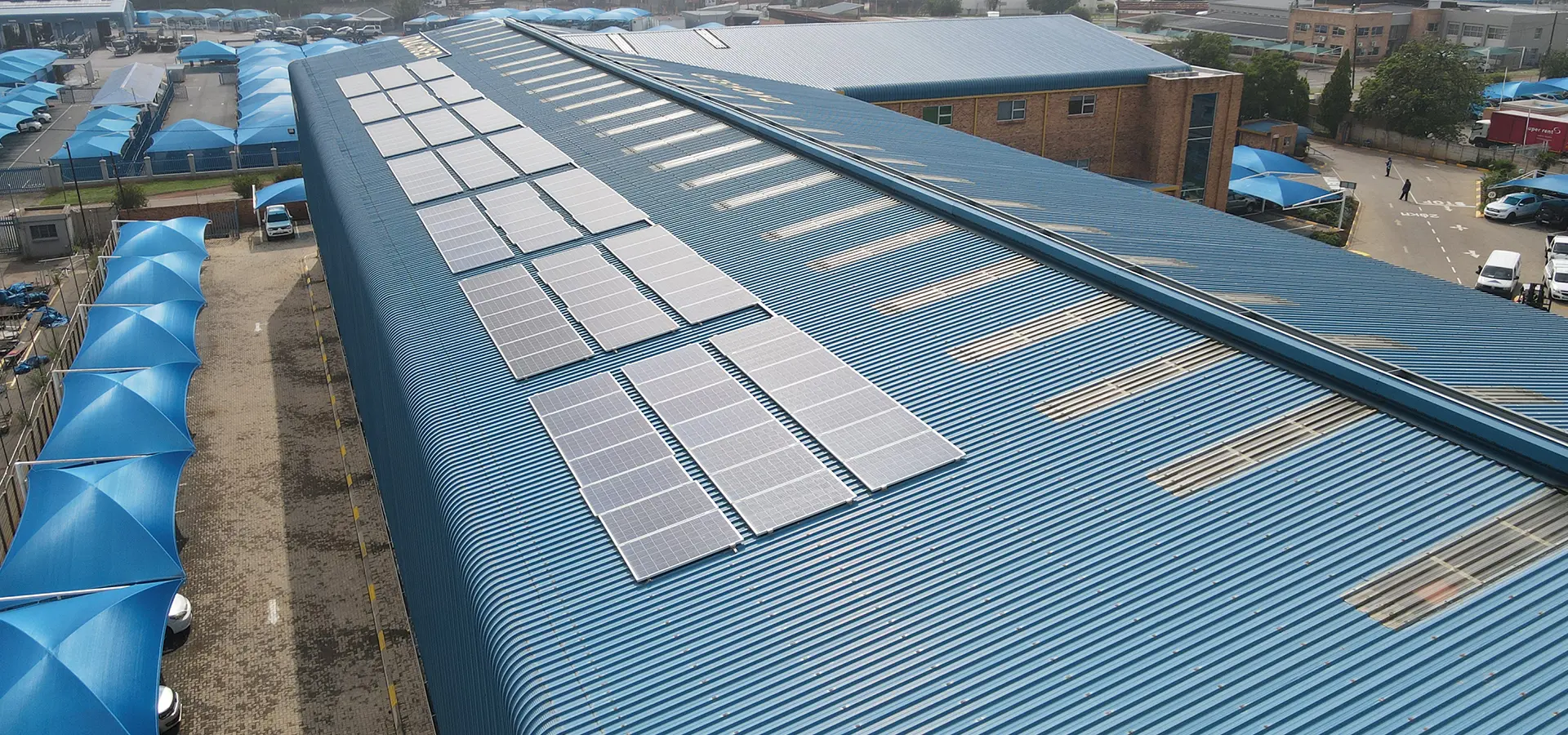
Rooftop solar is one of the better investments a South African business can make right now. But an array is typically warranted for twenty to twenty-five years, and it gets bolted to a surface most owners have never had properly assessed. If the roof underneath has ten years left in it, you haven't bought a twenty-five year asset. You've bought a ten-year one with an expensive dismantling job attached.
The Mismatch Nobody Costs For
Solar quotes are detailed about panels, inverters, racking, cabling and payback periods. What they almost never mention is the condition of the roof, because that isn't the solar installer's job and, in fairness, isn't their expertise either.
So the question goes unasked. Does this roof have twenty-five years left? For a great many industrial buildings in this country — sheeting that's already twenty years old, corroding at the gutter lines, with a coating that's chalking and fixings that need attention — the honest answer is no. And once the array is up, finding that out gets expensive.
"Solar panels last twenty to twenty-five years. Nobody asks whether the roof underneath them does — and if it doesn't, you'll be paying to take the array off to find out."
What It Costs to Fix a Roof Under an Array
Suppose the roof needs remedial work in year eight. What was a straightforward job on an open roof now involves:
- De-installing the array — panels removed, labelled, handled carefully and stored somewhere safe
- Stripping the mounting system — racking off, and every existing penetration disturbed
- Electrical isolation and recommissioning — by a certified installer, at both ends of the job
- The roof work itself — the part you actually wanted to do
- Reinstallation — new mounting penetrations, all of them fresh leak paths to be sealed properly
- Lost generation for the entire duration, which on a large array is not a rounding error
- Warranty exposure — check what dismantling and reinstalling does to the guarantees on both the solar installation and the roof
A two-week roof job becomes a multi-month coordination exercise between two trades, and the roof work is the cheapest line on the invoice.
What Solar Actually Does to a Roof
Even on a sound roof, an array changes things. It's worth going in with clear eyes:
New Penetrations
Unless the system is genuinely non-penetrative, every mounting point is a new hole through your roof. Hundreds of them, sealed by whoever happened to be installing that day.
Added Load
Panels and racking add dead load to purlins that were specified decades ago for sheeting and nothing else. Worth confirming before, not after.
Wind Uplift
An array is a large surface for wind to get under. Those uplift forces don't disappear — they transfer into the mounting points, the fixings and the structure beneath.
Foot Traffic
Installation and ongoing maintenance mean people walking your roof regularly. Dented pans, crushed profiles and damaged coatings are routine consequences.
Trapped Debris
Leaves, dust and windblown material collect under panels where nothing washes them out and nobody can reach them. Damp debris sitting on steel is how corrosion starts.
Lost Access
The roof under the array becomes effectively invisible. You can't inspect it, clean it, or repair it without taking the installation apart.
Once the array is up, the roof beneath it is sealed off. You can't inspect it, you can't clean it, and you can't repair it without dismantling the installation.
What Pre-Solar Remediation Involves
Done properly, remediation happens in the window between deciding on solar and the installers arriving — and it isn't complicated:
Condition Assessment
A full survey of the roof, top and underside, with an honest estimate of remaining service life. This is the number that determines everything else — including whether solar on this roof makes sense at all yet.
Structural Confirmation
Establishing that the purlins and supporting structure can carry the additional dead load and the uplift forces the array will generate. Best confirmed on paper, in advance.
Remedial Work
Fixings replaced, laps resealed, corrosion treated, flashings and penetrations put right, gutters cleared and repaired. All of it far cheaper now than under a live array.
Protect or Replace
A protective coating system to extend the roof's life to match the panels' — or, where the sheeting is genuinely past it, re-sheeting before the array goes on rather than eight years after.
Coordinate the Detailing
Agreeing with the solar installer how mounting penetrations will be made and sealed — and ideally having a roofing contractor detail them, because sealing a hole through a roof is roofing work.
Questions to Ask Before You Sign the Solar Contract
- How many years does my roof realistically have left? Get that assessed independently of the solar quote
- Does the mounting method penetrate the sheeting? If so, how many points, and who seals them
- If it leaks afterwards, whose problem is it? Get the answer in writing before anyone drills anything
- Can the structure carry the load and the uplift? Confirmed by someone qualified to say so
- What do my existing roof warranties say about third-party penetrations? Many exclude them — check yours before, not after
- What's the plan if the roof needs work in year eight? If nobody has an answer, that's the answer
The Right Sequence Is Also the Cheaper One
Doing the roof first isn't just safer, it's less expensive. Access and safety arrangements are already in place, the roof is open and unobstructed, the work happens in one planned shutdown instead of two, and nothing has to be dismantled and rebuilt. The remediation costs what remediation costs — no de-installation, no storage, no lost generation, no second electrical commissioning.
Sicon Group carries out pre-solar roof assessments and remediation for industrial and commercial properties across South Africa. We'll tell you honestly what condition the roof is in, how long it has left, and what it needs so that it outlives the array you're about to put on it. If the answer is that the roof is fine as it stands, we'll tell you that too.
Sort the Roof Out First
Get a pre-solar condition assessment before the panels go on — and know exactly what you're mounting them to.
Contact Sicon Group